Skip to resource content
Get Funded Before ChristmasReserve
Founder conversationBuilder <$5m

Funding for Bakeries: How Cranky Granny's Grew on Organic Social and Chose Debt

Founder Sianni Dean on growing an organic audience, costing each roll and store opening, and why she preferred debt to equity for a third store.

Sianni Dean · Cranky Granny's

Published August 12, 2026
About this resource
Format
The Deal
Length
18 min video
Inside
4 lessons, 10 funding moments and a mind map
Subscribe on YouTubeRead the full transcript

Cranky Granny's grew its cinnamon roll shops by building an organic social audience, costing each roll and each store opening in detail, and running pop-ups in other Texas cities while she looks for a third location. When she wanted $150K for a third store, she told Nathan Latka she preferred debt to equity, and they agreed on $150K repaid over 24 months until he had made back 1.4x his money.

Key takeaways

  • Card processing fees of 4.5% were, she thinks, the negotiation that cost her the most, because the fee comes off every single sale; she says she is well below that now. 03:02
  • She built about 195,000 Instagram followers organically, keeps about 3,000 SMS and 30,000 email contacts, texts a different message every week, and sometimes runs ads of roughly $60 to $100 a day. 03:27
  • A roll that sells for $8 costs about $1.75 for the roll and packaging and about $2.75 with labor, before rent, lights, pest control and insurance. 04:37
  • The newest store's build-out was estimated at about $60,000 and cost about $85,000, funded from savings, a founding members program and a Toast Capital loan of about $60,000. 06:28
  • Her first pop-up in 2017 sold out with about 50 or 60 rolls, she worked out of other restaurants' kitchens before signing leases, and she says pop-ups in Dallas, Houston and San Antonio have gone well. 08:05
  • She preferred debt to equity and agreed the repayment percent could apply to the whole business; the deal was $150K repaid over 24 months until Nathan Latka had made back 1.4x. 13:50

Takeaways and lessons are Founderpath’s summary of this resource, checked against the transcript. Quotes are verbatim.

Mind map

Everything in this resource on one page

Cranky Granny's

Select any point on the map to see the quote behind it, play that moment, or jump to the full lesson.

The playbook: 4 lessons from Cranky Granny's

Lesson 1 · Content & SEO

Build an owned audience before you pay for reach

Cranky Granny's has about 195,000 Instagram followers that she says are all organic, plus about 3,000 people on SMS and about 30,000 on email. She sends a different text every week and posts about every day, and she sometimes runs ads as well.

  1. Keep a list you can message directly, not only a social following.

    “So we have probably about 3,000 people on our SMS and about, I think the last time I looked at it was like 30,000 on our email. We send out a different text message every week and I really utilize our social media a lot.”

    Sianni Dean, Watch at 03:27
  2. She grew the audience without paying for followers.

    “All organic. And I take pride in that.”

    Sianni Dean, Watch at 03:50

    Going further: Instagram is her biggest channel at about 195,000 followers, with about 65,000 on Facebook and 65,000 on TikTok.

  3. Her Facebook ads rest on a following she already has.

    “we're not paying for followers or anything like that, but sometimes we do run ads on social media. And sometimes we could be running anywhere between a $60 ad a day to a $100 ad.”

    Sianni Dean, Watch at 05:19

    Going further: She says she is comfortable running Facebook ads because she has a lot of Facebook followers.

  4. Consistency is the engine: she posts about every day.

    “I post just about every single day. Sometimes multiple times a day.”

    Sianni Dean, Watch at 10:50

    Going further: Nathan asked whether growth came from social media or the location, and she named social media and word of mouth.
Lesson 2 · Metrics & forecasting

Cost one unit, then budget the store around it

The roll Nathan tasted sells for $8 retail. She puts the roll and packaging at about $1.75 and about $2.75 with labor, and says that figure leaves out rent, lights, pest control and insurance. Her newest store's build-out was estimated at about $60,000 and came to about $85,000.

How the cost of opening a store grew

  1. Pflugerville shopCost around 40 to 50,000 to open, about three years earlier10:07
  2. Newest store, her estimateAbout $60,000 at first06:28
  3. Newest store, actualAbout $85,000, with at least $10,000 of electrical and a month of training06:05
  4. Third store pro formaAbout $150,000: new equipment, marketing and a cushion for the first monthsPlanned12:49
Source: The Deal, Cranky Granny's episode. The third store is a pro forma she gave on camera, not yet built.
  1. Start with the cost of one unit and name what the number leaves out.

    “So for the cinnamon roll and packaging, we're looking at about $1.75. Now once we have to take in consideration labor and things of that nature too, we're looking at about $2.75.”

    Sianni Dean, Watch at 04:44

    Going further: The same passage lists what the $2.75 excludes: rent, lights, pest control and insurance.

  2. A percentage fee on every sale is worth negotiating.

    “4.5% off of every single time a customer is coming to shop with you. That's a lot.”

    Sianni Dean, Watch at 03:05

    Going further: She says the point-of-sale system takes a percentage of each sale, that the rate can be negotiated, and that she is now well below 4.5%.

  3. Rent can double between sites, so cost each store on its own.

    “The rent is literally double at this location than what it is over there.”

    Sianni Dean, Watch at 05:09

    Going further: The newer store is next to a Target and a Subway, which Nathan called prime real estate; the other has been open three years in Pflugerville.

  4. Budget a build-out with room for overruns and training.

    “It did cost me probably about a good $60,000 at first. That's what I thought it was going to cost. Then that quickly turned into about a good $85,000”

    Sianni Dean, Watch at 06:28

    Going further: At least $10,000 went on electrical work, and she ties "that extra 20" to a month of training at her other store; she called the equipment a former cookie shop left behind "a blessing."

What one $8 roll leaves after her costs Our arithmetic from her figures for an $8 roll. It leaves out rent, lights, pest control and insurance, which she did not cost per roll. The 4.5% fee is the rate she once paid and says she has since reduced.

Cost countedCost per rollLeft from the $8
Roll and packaging$1.75$6.25 (78%)
Plus labor$2.75$5.25 (66%)
Plus a 4.5% card fee, the rate she once paid$3.11$4.89 (61%)

Lesson 3 · Product-market fit & first customers

Sell small before you sign a lease: pop-ups, then a borrowed kitchen

Her first pop-up sold out with about 50 or 60 rolls, and she says she had been building a customer base by selling candy since she was about five. She worked out of other restaurants' kitchens before signing her first lease, and she is looking at Dallas, Houston and San Antonio for a third store and says pop-ups there have gone well.

From pop-ups to stores, and the next city

  1. Pop-up shopsThe first sold out with about 50 or 60 rolls and made about $30008:05
  2. Someone else's restaurantThree or four months before she signed her first lease08:38
  3. First store at The DomainAbout 16 to 18 months, then closed08:38
  4. Pflugerville storeOpen about three years, after another stint in someone else's restaurant08:38
  5. Third storeDallas, Houston or San Antonio, in a second-generation spacePlanned12:18
Source: The Deal, Cranky Granny's episode. The third store is a plan: she had not found a location yet.
  1. A sell-out at a small event is a cheap demand test.

    “Sold out of our first pop up shop with, I think, like maybe 50 or 60 cinnamon rolls. And then I just kept on going.”

    Sianni Dean, Watch at 08:05

    Going further: That first pop-up made about $300, and she says she then kept doing different pop-ups and selling out quickly.

  2. She already had customers because she had sold since childhood.

    “I mean, I just graduated out of high school and I've been selling candy and stuff like that since I was as young as like five. So I've, so essentially I've been growing a customer base for like, by that point, like ten years.”

    Sianni Dean, Watch at 08:24
  3. Use someone else's kitchen before signing a lease.

    “I was in somebody else's restaurant for about a good three, four months before I signed a lease to my first store, was over at The Domain.”

    Sianni Dean, Watch at 08:38

    Going further: After closing the Domain store she again worked inside someone else's restaurant before taking the Pflugerville space, which she has had about three years.

  4. She has had success with pop-ups in the cities she is considering, but says she needs the opportunity of a space.

    “We have been having a lot of success in all those different areas whenever we go to do a pop up.”

    Sianni Dean, Watch at 12:18

    Going further: She says she needs the opportunity to be in any one of the three, and wants a second-generation space so there is little build-out cost.

Lesson 4 · Funding & capital

Fund each store in layers, then negotiate the repayment two ways

She funded the newest store from savings, a founding members program and a Toast Capital loan of about $60,000, which Toast takes back as 14% of her sales every day. For a third store she told Nathan Latka she preferred debt to equity, and they settled on $150K repaid over 24 months until he had made back 1.4x.

How the $150K deal was negotiated

  1. Nathan asksEquity?Would she take $150K for a share of the business, with nothing to repay?She prefers debt13:40
  2. Nathan floats12%Of daily sales instead of the 14% Toast takes; an 11% counter is floatedUsed as the working rate15:38
  3. Where it appliesWhole businessThe percent is taken against all locations, not only the new oneShe agrees16:11
  4. Nathan prices1.2x to 1.4x1.2x if repaid in the first 12 months; more if his money stays out longerLonger costs more17:04
  5. The deal$150KRepaid over 24 months until Nathan has made back 1.4xAgreed17:48
Source: The Deal, Cranky Granny's episode. Nathan's closing recap states the amount, term and multiple, not the daily percent; he used 12% in his repayment question.
  1. She combined savings, a founding members program and a Toast Capital loan.

    “So some of it came from savings. We also had like a founding members program where we gave people the opportunity to kind of donate money into helping us open up the location.”

    Sianni Dean, Watch at 07:12

    Going further: She says the program brought in less this time than the first time, and that she took the Toast Capital loan out from the Pflugerville store's Toast point-of-sale and used it for the new location.

  2. A repayment taken from sales removes a bill to remember.

    “Because I feel like it takes away me having to think about, oh, I have to go pay this bill when I already have everything else getting paid.”

    Sianni Dean, Watch at 15:29

    Going further: Toast takes 14% of her sales every single day, and Nathan notes that on the $60K loan she owes back $77K.

  3. She has funded growth without selling equity.

    “And that's been the way that I've been able to maintain 100% ownership.”

    Sianni Dean, Watch at 15:09

    Going further: Without Nathan's offer she would look at savings, credit again and maybe another Toast Capital loan. She said she might change her mind on equity if it meant a partner to help open a fourth store.

  4. Negotiate the daily percent and the total repaid separately.

    “Well, we can certainly go back and forth on that daily percentage, but there's two things to negotiate. One is the take rate, the daily percent. The second is the total you owe me back.”

    Nathan Latka, Watch at 15:38

    Going further: Because a new store starts at $0 in sales, he proposed taking the percent against the whole business; she agreed, saying it would also let him be paid back faster.

The Toast Capital loan next to the deal she agreed Our arithmetic from figures in the episode: $77K / $60K is about 1.28x; 1.4 x $150K is $210K; $210K over 24 months is $8,750, matching the monthly figure Nathan gives. The Toast total is Nathan's statement, not Toast's.

TermToast Capital loanThe deal on The Deal
AmountAbout $60,000$150,000
Total owed back$77,000, about 1.28x1.4x, or $210,000
Repayment14% of her sales every day12% of daily sales was the working rate in Nathan's question; the recap states only 24 months and 1.4x
Monthly paceNot statedAbout $8,750 across the business, if paid evenly

Funding moments

The 10 moments where the conversation turns to how a growing business pays for growth, and the idea behind each one.

  1. 07:12Self-funding from sales
    “So some of it came from savings. We also had like a founding members program where we gave people the opportunity to kind of donate money into helping us open up the location.”
    Sianni Dean
    Bootstrap financing →
  2. 07:32Revenue-based financing
    “The Toast Capital loan, I believe I took that out for about 60,000.”
    Sianni Dean
    Revenue-based financing →
  3. 17:04Early repayment
    “If you pay me back in the first twelve months, you pay me back 1.2x.”
    Nathan Latka
    Debt financing →
  4. 15:24Revenue-based financing
    “So they take 14% of our sales every single day.”
    Sianni Dean
    Revenue-based financing →
  5. 15:38Collateral and debt terms
    “So with Toast, it was 60K, but you owe back 77K.”
    Nathan Latka
    Debt financing →
  6. 13:40Selling equity
    “If I made you an offer for 150K, but said I want X percent of the business, in other words, you don't have to pay it back. It's not debt.”
    Nathan Latka
    Venture capital →
  7. 13:50Selling equity
    “I probably prefer maybe a debt offer.”
    Sianni Dean
    Venture capital →
  8. 15:09Self-funding from sales
    “We're gonna be looking at savings, credit again, and then maybe another Toast Capital.”
    Sianni Dean
    Bootstrap financing →
  9. 17:21Collateral and debt terms
    “If my money's out with you longer, I need to make more.”
    Nathan Latka
    Debt financing →
  10. 17:48Collateral and debt terms
    “So the deal you like a $150,000 paid back over twenty four months until I made back 1.4x my money?”
    Nathan Latka
    Debt financing →
Non-dilutive capital

Growth money without giving up equity

Founderpath provides non-dilutive capital for bootstrapped SaaS founders from $10K MRR: funded in 24 hours, no equity, no board seats.

See your funding offerNo pitch deck required

Cranky Granny's by the numbers

FigureValueWhen said
Cinnamon roll retail price$804:37
Roll and packaging costAbout $1.7504:44
Cost including laborAbout $2.7504:44
Card processing rate she once paid4.5%03:05
Kitchen display system: lines, then equipmentAbout $2,500 + at least $2,50002:14
Social ad spend, when runningSometimes $60 to $100 a day05:19
Newest store build-out: estimate, then actual$60,000, then about $85,00006:28
Pflugerville shop build-outAbout $40,000 to $50,00010:15
Cost to run the newest store each monthAbout $45,00012:56
Toast Capital loan, and the amount Nathan says is owed$60,000; Nathan says $77,000 owed back07:32
Pro forma for a third storeAbout $150,00012:49
The deal she agreed$150K over 24 months, 1.4x17:48

Where this may not work for you

Layered funding and a repayment taken from daily sales fit Cranky Granny's because a shop collects card sales every day and a point-of-sale system can take a share automatically. A software company with monthly or annual billing has a lumpier cash flow, so a daily or weekly percent may behave differently. The audience and pop-up lessons lean on a product people can sample and photograph, and on a founder who posts about every day. The deal was agreed on camera, and the episode does not say whether it was signed or funded.

Keep learning these skills

The same skills, taught by other founders.

Resource files

About the speaker
Sianni Dean

Sianni Dean

Founder · Cranky Granny's

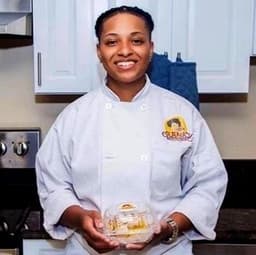
Sianni Dean is the founder of Cranky Granny's Sweet Rolls, which sells cinnamon rolls in the Austin area and was inspired by her grandmother. She came up with the concept at 14 in New Jersey, moved to Texas, worked out of another restaurant's kitchen and opened a first store before the Pflugerville shop, which has run about three years; when the episode was recorded she had two shops.

She launched the business in 2017 and moved to Austin in 2020, according to Eater Austin (October 2023) and Voyage Austin (March 2025). (said at 08:19, Eater Austin, Voyage Austin)

“I learned very early on, you always make sure you pay your people and make sure you pay your landlord.”
Sianni Dean, Watch at 11:31