Skip to resource content
Get Funded Before ChristmasReserve
Founder conversationBuilder <$5m

Funding for Pressure Washing Businesses: How Casa Washa Chose Debt Over Equity

Jet explains how he and his partners built a part-time power washing and window cleaning company in Austin, and why Nathan offered a $50,000 debt deal instead of equity.

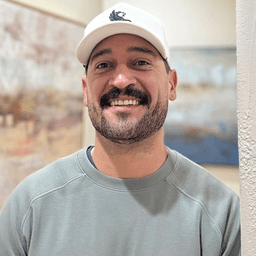
Jet Carter · Casa Washa

Published October 7, 2026
About this resource
Format
The Deal
Length
20 min video
Inside
4 lessons, 7 funding moments and a mind map
Subscribe on YouTubeRead the full transcript

Casa Washa grew by getting realtors and property managers to book it for pre-listing cleanings and thanking them with team lunches and office massages; many realtors now use it exclusively. When the founders asked for $200,000 for 30 to 40% of the business, Nathan Latka offered a $50,000 two-year loan at 15% instead, because he wasn’t convinced the business worked without the founders driving sales.

Key takeaways

  • The founders did free driveway jobs for friends and family to earn five-star reviews, and only then set their prices. 01:16
  • Realtors and property managers now send most of the work, mainly pre-listing cleanings before the listing photos. 03:52
  • They win realtor teams with a Friday team lunch, and thank realtors who book them with a two-hour chair massage at their office. 08:30
  • They bought or rented equipment only after selling the job it was for, then bought a retiring competitor’s truck, trailer, CRM, clients and website and earned the cost back in about two jobs. 04:36
  • Nathan Latka passed on buying 30 to 40% because he wasn’t convinced the business worked without its founders, and offered $50,000 of debt at 15% over two years, secured by the trucks. 13:13

Takeaways and lessons are Founderpath’s summary of this resource, checked against the transcript. Quotes are verbatim.

Mind map

Everything in this resource on one page

Casa Washa

Select any point on the map to see the quote behind it, play that moment, or jump to the full lesson.

The playbook: 4 lessons from Casa Washa

Lesson 1 · Pricing & packaging

Earn proof before you set a price, then sell packages

Casa Washa’s first paid job brought in $100. Today a standard driveway is a flat $250 that includes the front walkway, a house wash is priced at 40 to 45 cents a square foot, and most realtor work is sold as package deals: the episode’s example combined a driveway, windows and an exterior soft wash for $1,200.

  1. Reviews came before revenue.

    “We did a lot of free jobs at first for friends, for family, and just trying to, like, build our brand, kind of get exposure, and get some five star reviews.”

    Jet Carter, Watch at 01:16

    Going further: The free jobs had a purpose and an end point: once they had the reviews, they “figured out what the pricing was gonna be.” Decide how many free jobs you will do before you start.

  2. They sell the service around the commodity.

    “Anybody can pull out their pressure washer and clean a window, but the service element that we can provide, it really elevates our services and makes us more of like a white glove luxury service to provide.”

    Jet Carter, Watch at 01:37

    Going further: That positioning supports a $1,200 package: a realtor buys a listing that is ready for photos, not a list of separate tasks.
Lesson 2 · Partnerships & referrals

Turn one partner type into your main sales channel

Realtors need a house to look its best before the listing photos, so a cleaning company solves a problem they have on every listing. Most of Casa Washa’s work now comes from realtors and property managers, often as pre-listing package deals.

The realtor referral loop

  1. Visit a brokerage and buy the team lunch08:30
  2. Realtor books a pre-listing clean before photos03:52
  3. Package job: house wash, roof, solar panels, gutters03:52
  4. Thank-you: a two-hour chair massage at their office08:30
  5. Realtor uses Casa Washa exclusively13:34

↺ More listings, more realtors hear about it

Source: The Deal, Casa Washa episode. Every step is described in the episode; select a timestamp to play it.
  1. Make the pitch a gift to the whole team.

    “We'll go out to realtors brokerages and like on a Friday we'll buy the whole team lunch and talk about what we do.”

    Casa Washa owner, Watch at 08:30

    Going further: The thank-you is just as deliberate: when a realtor uses them, a chair masseuse spends about two hours at that realtor’s office, and they hand out Chick-fil-A gift cards.

  2. Every job is also a sales visit.

    “it's a good opener, you know, because they may come out or we may knock on their doors and say like, Hey, you probably saw us or heard us in the neighborhood.”

    Eric Pittman, Watch at 07:07

    Going further: On job sites they also knock on doors and put out door signs, so neighbors who hear the noise become leads.

  3. The channel compounds into exclusivity.

    “Now we've created some partnerships and a lot of realtors are using us exclusively now, started middle of last year.”

    Casa Washa owner, Watch at 13:34

    Going further: That demand is why they turn work away (“We’ve had to turn away a lot of jobs”), and a second truck to stop saying no is what the loan in lesson 4 pays for.

Lesson 3 · Buying & selling companies

Let each sale pay for the equipment

The founders didn’t buy a truck to start. When a competitor who had become a mentor retired, they bought his trailer, truck, CRM, clients and website, and ran his brand alongside their own while its phone calls kept coming in.

Capital followed sales at every step

  1. Own pressure washerFree jobs for reviews01:16
  2. Gear per sold jobBuy or rent after each sale04:36
  3. Buy a retiring competitorTruck, trailer, CRM, clients and website, paid back in about two jobs04:57
  4. Custom truck rigA $30,000 truck plus a $30,000 skid04:36
  5. Second truckFunded by the $50,000 loanPlanned18:02
Source: The Deal, Casa Washa episode. The second truck is the stated use of the $50,000 loan, not yet bought when the episode was recorded.
  1. No equipment before the sale.

    “So we started out making sales and when we would sell a job, we would go buy the equipment we need or rent it to complete the job.”

    Casa Washa owner, Watch at 04:36

    Going further: Every purchase had a paying customer behind it, so the business never carried idle equipment while it was still finding demand.

  2. A retiring competitor can be a cheap acquisition.

    “It's like dirt cheap. And we bought it. We made all that money back in like two jobs.”

    Casa Washa owner, Watch at 05:14

    Going further: They kept the bought brand, Grizzly Powerwashing, running for a while so its calls still came in, and put their own logo on its better website.

Lesson 4 · Funding & capital

Match the money to the risk: why the investor chose debt

The founders asked for $200,000 to open a second city. Nathan’s objection was not the market. Both founders have other businesses, including a money-management firm with about $3 million in revenue, and he expected their time to go there.

How the deal was negotiated

  1. Founders ask$200KFor 30 to 40% of the business, to open a new cityDeclined10:21
  2. Nathan offers$40KRepaid as a percent of sales, to fund one truckFounders want a partner16:33
  3. Founders counter10%Interest, plus a 6% commission on apartment deals he bringsDeclined18:35
  4. The deal$50KAt 15% over two years, secured by the trucks, no prepayment penaltyAccepted19:01
Source: The Deal, Casa Washa episode. Accepted pending the third partner, Eric Pittman, who owns 49%.
  1. Equity investors price the team, not just the market.

    “I'm not convinced the business works without you two driving the top and middle part of the funnel yet.”

    Nathan Latka, Watch at 13:13

    Going further: An equity investor buys a share of the founders’ future attention. With a larger business competing for that attention, Nathan doubted it.

  2. Expensive debt has to bring something extra.

    “So the only reason you give me that premium return is if you believe I can add significant value to the business.”

    Nathan Latka, Watch at 17:26

    Going further: Nathan says a bank would probably be cheaper. Compare any investor’s debt with the bank price, and decide what the extra interest buys you.

What each option would cost at today’s profit. Our arithmetic, using the founders’ own figures. The episode states the terms but not a repayment schedule.

TermThe ask: equityThe deal: debt
Amount$200,000$50,000
Price30 to 40% of the business15% a year, over two years
Cost at about $10,000 to $12,000 of monthly profitThe investor’s share of profit: $3,000 to $4,800 a month, with no end dateAbout $2,424 a month for 24 months and about $8,200 of interest in total, if repaid in equal monthly payments
ControlA new 30 to 40% partnerNo equity given up; the trucks are pledged as collateral

Funding moments

The 7 moments where the conversation turns to how a growing business pays for growth, and the idea behind each one.

  1. 04:36Self-funding from sales
    “when we would sell a job, we would go buy the equipment we need or rent it to complete the job.”
    Casa Washa owner
    Bootstrap financing →
  2. 12:25Reinvesting profit
    “We've just reinvested everything into our business.”
    Casa Washa owner
    Bootstrap financing →
  3. 13:01Selling equity
    “We don't, we don't need one. Yeah. We don't need one at all.”
    Casa Washa owner
    Venture capital →
  4. 16:33Revenue-based financing
    “Why don't I make you a $40,000 offer? You pay me back as a percent of sales on the business.”
    Nathan Latka
    Revenue-based financing →
  5. 17:26Investor debt vs bank debt
    “You're gonna tell me rightly that you can probably go get bank debt for much cheaper.”
    Nathan Latka
    Bank loans for SaaS →
  6. 18:02Collateral and debt terms
    “I'll offer you $50,000 collateralized by your assets, the trucks, right?”
    Nathan Latka
    Debt financing →
  7. 18:23Early repayment
    “If you wanna pay it early, we'll charge no prepayment penalties.”
    Nathan Latka
    Debt financing →
Non-dilutive capital

Growth money without giving up equity

Founderpath provides non-dilutive capital for bootstrapped SaaS founders from $10K MRR: funded in 24 hours, no equity, no board seats.

See your funding offerNo pitch deck required

Casa Washa by the numbers

FigureValueWhen said
First paid job$10002:03
Jobs per monthAbout 4002:54
Average job, by Nathan’s mathAbout $1,00004:20
Standard driveway, including the front walkway$25003:23
House wash, per square foot40 to 45 cents03:29
Example realtor package$1,20004:11
Truck plus custom wash skid$30,000 + $30,00004:36
EBITDA, first half of this year$70,00012:25
Receivables still to be paid$50,00012:25

Where this may not work for you

Realtor referrals work for Casa Washa because it sells a local, visible service that helps a listing sell, and because the founders show up in person. That in-person work is exactly the risk Nathan priced. If your partners can’t see the result of your work, or your founders can’t keep doing the relationship work, expect a slower channel.

Keep learning these skills

The same skills, taught by other founders.

Resource files

About the speaker
Jet Carter

Jet Carter

Co-Founder · Casa Washa

Jet Carter co-founded Casa Washa, an Austin company that does window, exterior and interior cleaning, with his partner Ally and their friend Eric Pittman after a big freeze in Austin. He runs it part time alongside his main business as a financial planner and money manager, while Eric runs operations full time.

Jet and Ally Carter wrote No-Money Home Service Kit: Casa Washa Handbook (2026), a playbook for starting a home service company without a big budget that, they say, competitors and friends in the industry use as an internal handbook. (said at 15:11, Amazon listing)

“Now it's a business we do on the side, but we have meetings and we run this like a real company all the time.”
Jet Carter, Watch at 13:58