Skip to resource content
Get Funded Before ChristmasReserve
Founder conversationBuilder <$5m

Funding for Food Trucks: How Cowboy Cubans Sized a Coffee Offer

A 19-year-old Austin food truck owner explains how daily Instagram reels drove sales and how he would use $15K to add coffee.

Connor Garbo · Cowboy Cubans

Published June 24, 2026
About this resource
Format
The Deal
Length
21 min video
Inside
4 lessons, 32 funding moments and a mind map
Subscribe on YouTubeRead the full transcript

Funding for food trucks

Food trucks can use SBA-backed 7(a) loans for equipment and working capital, SBA Express for smaller loans, or microloans up to $50,000, according to SBA sources checked November 17, 2026. Our count of SBA's FY2026 data found 210 non-cancelled 7(a) approvals for mobile food services, with a $50,000 median.

Funding options for food trucks
Funding typeTypical amountBest for
SBA 7(a)Up to $5 millionEquipment, supplies and working capital; SBA-stated program cap, not a typical food-truck approval.SBA 7(a) program, checked November 17, 2026
SBA ExpressUp to $500,000Smaller 7(a) borrowing with lender-delegated processing; SBA-stated limit, not guaranteed eligibility.SBA lender program guide, November 17, 2026
SBA microloanUp to $50,000Smaller equipment, supplies and working-capital needs through local intermediaries; SBA-stated cap.SBA microloans, checked November 17, 2026

SBA states that 7(a) applicants must be creditworthy and show a reasonable ability to repay, operate for profit in the U.S., meet size rules and be unable to obtain the desired credit on reasonable terms from non-government sources. Individual lenders evaluate the application. Checked November 17, 2026. (SBA 7(a) eligibility)

SBA 7(a) loans to mobile food services, fiscal 2026

Our calculation of SBA's FY2026 mobile-food-service data finds 210 non-cancelled 7(a) approvals totalling $20,016,700 across 71 lenders. The median approved amount is $50,000. This national category includes food trucks and other mobile food services; it is not a count of loans to Cowboy Cubans.

Non-cancelled approvals
210
Approved dollars
$20,016,700
Median approval
$50,000
Median initial rate, 210 records
9.75%
Median term, 210 records
120 months
Approvals at $50,000 or less
122
Startup, funds will open business
59
SBA Express approvals
126
Lenders that approved the most SBA 7(a) loans to mobile food services in fiscal 2026
LenderLoansApproved
U.S. Bank, National Association38$1,598,800
Manufacturers and Traders Trust Company25$764,400
The Huntington National Bank18$1,580,300
Newtek Bank, National Association13$1,345,000
TD Bank, National Association12$357,400

Our count: ApprovalFY 2026, NAICS 722330, excluding 36 CANCLD rows. Approvals are not disbursements; 7(a) only. Medians use all 210 non-cancelled records. Startup means funds will open business. Lenders ranked by loan count, then approved dollars and name. Historical activity does not establish current availability, eligibility or endorsement. Source: SBA 7(a) FOIA file, September 30, 2026, data as of September 30, 2026.

On The Deal

Connor initially described a $40,000-$50,000 truck project. Nathan offered $15,000 for coffee, with a 30-day holiday and 1.2x repayment over 16 months or 1.4x over 24 months. Connor accepted on camera; the recording does not establish a signed final contract, the complete sales-share schedule or cash disbursement. Watch at 13:46 Every funding moment in the episode

Sources checked November 17, 2026. Lenders change their terms; confirm amounts and rates with the lender before you apply.
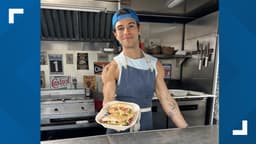
Cowboy Cubans paired daily founder-led videos with customer questions, then opened for lunch and found it needed more preparation capacity. Connor Garbo accepted a $15,000 coffee-equipment offer on camera after Nathan Latka steered the discussion away from another truck and tested labor and repayment costs.

Key takeaways

  • Connor used about $20,000 of his own savings and repays his mother for the trailer through sandwich sales. 01:58
  • He weighs each portion because a 25-cent difference in meat cost adds up across orders. 05:24
  • A reel with about 400,000 views preceded a first day without a sandwich sale; he then asked arriving customers how they found him. 07:16
  • After adding lunch in week 3, he found that 15 pounds of pork could last only one day. 09:47
  • The accepted on-camera coffee proposal was $15,000, with a 30-day payment holiday and a repayment multiplier that rises if repayment takes longer. 16:52

Takeaways and lessons are Founderpath’s summary of this resource, checked against the transcript. Quotes are verbatim.

Mind map

Everything in this resource on one page

Cowboy Cubans

Select any point on the map to see the quote behind it, play that moment, or jump to the full lesson.

The playbook: 4 lessons from Cowboy Cubans

Lesson 1 · Partnerships & referrals

Choose a location that benefits from your customers

Connor used a trailer his mother already owned, after writing her a business plan and putting his savings into the launch. At Rio Mart, he describes a complementary arrangement: he sells food, the market sells drinks and concertgoers need something to eat.

  1. The host and the tenant can serve different parts of the same visit.

    “I don't sell drinks. He doesn't sell food. People after a concert want food.”

    Connor Garbo, Watch at 04:25

    Going further: The market also holds concerts on Friday and Saturday. This is a specific source of nearby demand, separate from the audience watching his videos.

  2. Put the location agreement on paper before relying on it.

    “No. It's on paper signed.”

    Connor Garbo, Watch at 11:35

    Going further: Nathan asks whether the lot is exclusive; Connor says it is and confirms the arrangement is signed. Later he says rent is locked for one year.

Lesson 2 · Metrics & forecasting

Measure the unit cost before calling the cash profit

Connor weighs meat for each sandwich so he can track food cost rather than let portions drift. Nathan later separates the sandwich contribution from the cash needed for rent, staff and trailer repayments.

  1. Small variations in delivery cost accumulate across sales.

    “I could be selling a dollar and a half worth of meat for one and then a dollar and a quarter for another, so I'm losing 25¢.”

    Connor Garbo, Watch at 05:50

    Going further: His stated reason for weighing is that he otherwise cannot know how much he is selling. The control connects the portion served to the cost of that sale.

  2. Subtract the remaining operating costs before treating contribution as profit.

    “That's your gross profit, but then you reinvest that, like paying your mom back, the rent, your employees. Do you pay yourself?”

    Nathan Latka, Watch at 12:47

    Going further: Connor says the full sandwich costs about $4 and sells for $14-$15. Those figures leave $10-$11 before the other costs Nathan names, rather than a verified net profit.

Check the food-cost percentage against the stated price Our arithmetic using cue-64: $2.50 divided by $8 is 31.25%, slightly above Connor's separate 27%-30% estimate. Ingredients only; labor, rent and financing are excluded. Figures are historical statements, not current menu prices.

ItemEpisode inputsOur calculation
Cheaper sandwich$8 sale; about $2.50 ingredients31.25% ingredient cost
Full sandwich$14-$15 sale; about $4 ingredients$10-$11 before other expenses

Lesson 3 · Personal brand & LinkedIn

Check whether the audience turns into customers

Connor says a launch reel reached about 400,000 views, yet he sold no sandwiches on his first day. When customers arrived on Tuesday, he asked where they heard about him and continued posting daily for the first five weeks.

From video attention to a preparation problem

  1. Launch reel, no first-day sandwich sales07:16
  2. Ask customers how they found the truck07:42
  3. Post a reel every day for five weeks09:08
  4. Add lunch in the third week09:47
  5. Recalculate how much pork to prepare10:11
Source: Cowboy Cubans on The Deal. This is the sequence Connor describes, not proof that a particular post caused a sale.
  1. Ask actual customers which content brought them in.

    “Tuesday comes around. I get a couple guests. I talk to them. How'd you hear about me? Oh, I heard about you from TikTok and Instagram and whatnot.”

    Connor Garbo, Watch at 07:42

    Going further: One customer interviewed at the truck says he found it on TikTok and was making approximately his fourth visit. That is evidence of one repeat buyer, not a measured conversion rate for all views.

  2. Keep publishing while learning what your audience responds to.

    “For the first five weeks I was open, I posted a reel every single day.”

    Connor Garbo, Watch at 09:08

    Going further: Connor researched posting times, content, hashtags and songs. He also says he needed to be on camera and talk to people; the episode does not isolate which change caused sales.

  3. A new selling window can change your preparation requirement.

    “Just to realize that 15 pounds of pork was only gonna last me one day.”

    Connor Garbo, Watch at 10:11

    Going further: He added lunch in the third week after a cold, slow second week. His next question was how much product to prepare so he would not run out.

Lesson 4 · Funding & capital

Size the project and repayment before accepting capital

Connor first described a mobile truck costing roughly $40,000-$50,000, then discussed adding coffee to the current trailer. Nathan offered $15,000, and they worked through a barista shift, coffee pricing and repayment before Connor accepted on camera.

How the proposed capital use narrowed

  1. Another mobile truckConnor estimates about $40,000-$50,00013:46
  2. Improve the existing trailerNathan asks for a smaller equipment project14:42
  3. Coffee retrofit$15,000 proposal, with a barista15:43
  4. Payment holiday and repayment multipliers30 days initially; 1.2x or 1.4x depending on repayment time18:35
  5. Connor accepts on camera20:18
Source: The Deal. The coffee service is planned; acceptance on camera does not establish that funding was disbursed.
  1. Consider an improvement to the existing operation before duplicating it.

    “Is there any extra piece of equipment that you could add to this that would make you more efficient here that I could help fund?”

    Nathan Latka, Watch at 14:42

    Going further: Connor proposes cafe con leche and a morning barista instead of buying the second truck. The equipment purchase and new service remain plans in this recording.

  2. Include the cost of delivering the new product when checking repayment.

    “Cafe con leche is about $4.50. And then you have to look at an employee. So I pay my employees 15 an hour.”

    Connor Garbo, Watch at 17:28

    Going further: They discuss a three-hour shift six days a week. The rough $2,200 monthly figure covers labor and illustrative debt service, but it is not a complete forecast including coffee inputs and all overhead.

  3. Negotiate the setup period and the price of slower repayment separately.

    “The first thirty days, you don't owe anything to get you time to get it set up and invested.”

    Nathan Latka, Watch at 18:35

    Going further: Nathan restates the choice as 1.2x over 16 months or 1.4x over 24 months. He also mentions further ratchets to work out, so this is an accepted on-camera proposal rather than a complete executed contract or proof of disbursement.

Compare total repayment, not the multiplier alone Our arithmetic: $15,000 x 1.2 or x 1.4; divide totals by the 16 or 24 months Nathan names. These are illustrative averages, not APRs or a promised payment schedule. The 30-day holiday and further ratchets need a written contract.

ProposalTotal repaymentCost above principalIllustrative monthly average
1.2x over 16 months$18,000$3,000$1,125
1.4x over 24 months$21,000$6,000$875

Funding moments

The 32 moments where the conversation turns to how a growing business pays for growth, and the idea behind each one.

  1. 01:58Self-funding from sales
    “I took about 20,000 out of my own just from, like, working over the years.”
    Connor Garbo
    Bootstrap financing →
  2. 01:58Collateral and debt terms
    “She just takes a percentage out of each sandwich that I sell, and that's just how I pay her back.”
    Connor Garbo
    Debt financing →
  3. 03:04Reinvesting profit
    “All the pennies that I make get reimbursed into the business.”
    Connor Garbo
    Bootstrap financing →
  4. 03:47Self-funding from sales
    “Some of them are paying two, three grand a month just on rent.”
    Nathan Latka
    Bootstrap financing →
  5. 04:35Collateral and debt terms
    “I forget the specific amount, but it's almost like a dollar ish, $2 per sandwich.”
    Connor Garbo
    Debt financing →
  6. 05:09Self-funding from sales
    “It was all his money. It wasn't, like, it wasn't me. I was 12 years old.”
    Connor Garbo
    Bootstrap financing →
  7. 05:50Self-funding from sales
    “I could be selling a dollar and a half worth of meat for one and then a dollar and a quarter for another, so I'm losing 25¢.”
    Connor Garbo
    Bootstrap financing →
  8. 06:09Self-funding from sales
    “This one's gonna be $8. It costs me about $2.50.”
    Connor Garbo
    Bootstrap financing →
  9. 07:16Self-funding from sales
    “I prep 15 pounds of pork, which gets me about like 25, 30 Cuban sandwiches. I didn't sell a single one.”
    Connor Garbo
    Bootstrap financing →
  10. 09:08Self-funding from sales
    “So first day I did zero. Second day I did a $167. Third day I did 298. Fourth day I did 225 and then I had a big day of $416 on Friday.”
    Connor Garbo
    Bootstrap financing →
  11. 09:47Self-funding from sales
    “That week, I did, I think, less than, like, 400.”
    Connor Garbo
    Bootstrap financing →
  12. 10:53Self-funding from sales
    “a little over $2,000”
    Connor Garbo
    Bootstrap financing →
  13. 12:02Self-funding from sales
    “So I do about 7 to 8,000 average a week.”
    Connor Garbo
    Bootstrap financing →
  14. 12:33Self-funding from sales
    “So each sandwich takes about $4 to make for a full. I charge between 14 and 15 depending on your style.”
    Connor Garbo
    Bootstrap financing →
  15. 12:47Reinvesting profit
    “That's your gross profit, but then you reinvest that, like paying your mom back, the rent, your employees. Do you pay yourself?”
    Nathan Latka
    Bootstrap financing →
  16. 12:54Self-funding from sales
    “My rent now is, $850 a month.”
    Connor Garbo
    Bootstrap financing →
  17. 13:19Self-funding from sales
    “A year twelve months locked at $850, which is nice.”
    Nathan Latka
    Bootstrap financing →
  18. 13:46Self-funding from sales
    “To start off, it would be about 40,000 to $50,000. So that would be a down payment for the truck, or that could be a full cost expense if you find a really good deal.”
    Connor Garbo
    Bootstrap financing →
  19. 14:19Collateral and debt terms
    “Okay. So why buy 50,000 versus rent one first?”
    Nathan Latka
    Debt financing →
  20. 14:35Self-funding from sales
    “I would have to wait. I would have to... Percent have to wait, and it would be a long time.”
    Connor Garbo
    Bootstrap financing →
  21. 14:42Collateral and debt terms
    “I think maybe it's too fast to put 50 grand in on a whole another truck.”
    Nathan Latka
    Debt financing →
  22. 16:00Revenue-based financing
    “Every sale that I get from coffee, you take a percentage out, and that's how we can pay off that debt instantly.”
    Connor Garbo
    Revenue-based financing →
  23. 16:52Collateral and debt terms
    “I'll offer $15,000. You pay you pay that back 1.2 x over the first... If you pay it back in the first twelve to sixteen months.”
    Nathan Latka
    Debt financing →
  24. 16:52Collateral and debt terms
    “If it takes you longer to pay it back based off coffee sales, so let's say you pay back after sixteen months, the multiplier increases to 1.4 x.”
    Nathan Latka
    Debt financing →
  25. 17:23Collateral and debt terms
    “So do you think with coffee sales you could service debt payments to me of 1,125 per month?”
    Nathan Latka
    Debt financing →
  26. 17:28Self-funding from sales
    “Cafe con leche is about $4.50. And then you have to look at an employee. So I pay my employees 15 an hour.”
    Connor Garbo
    Bootstrap financing →
  27. 17:58Self-funding from sales
    “270 a week?”
    Connor Garbo
    Bootstrap financing →
  28. 18:12Collateral and debt terms
    “$2,200 a month with coffee, including labor and paying you back over time.”
    Connor Garbo
    Debt financing →
  29. 18:35Collateral and debt terms
    “The first thirty days, you don't owe anything to get you time to get it set up and invested.”
    Nathan Latka
    Debt financing →
  30. 18:35Early repayment
    “If you pay me back that $15,000 before sixteen months, after the one month holiday, you only owe 1.2 x the 15,000.”
    Nathan Latka
    Debt financing →
  31. 19:30Collateral and debt terms
    “$15,000 paid back 1.2 x over sixteen months or 1.4 x over twenty four months.”
    Nathan Latka
    Debt financing →
  32. 20:18Collateral and debt terms
    “Dude, I feel like we have a deal.”
    Connor Garbo
    Debt financing →
Non-dilutive capital

Growth money without giving up equity

Founderpath provides non-dilutive capital for bootstrapped SaaS founders from $10K MRR: funded in 24 hours, no equity, no board seats.

See your funding offerNo pitch deck required

Cowboy Cubans by the numbers

FigureValueWhen said
Trailer repayment, approximate per sandwich$1-$204:35
Portion cost drift in his example25 cents05:50
Cheaper sandwich, episode price$806:09
Cheaper sandwich, stated ingredient costAbout $2.5006:09
Launch preparation15 pounds of pork07:16
Daily video postingFirst five weeks09:08
Lunch service preparation limit15 pounds in one day10:11
Full sandwich, episode price$14-$1512:33
Full sandwich, stated ingredient costAbout $412:33
Lot rent, one-year agreement$850/month12:54
Proposed cafe con leche priceAbout $4.5017:28
Proposed barista wage$15/hour17:28

Where this may not work for you

This is a local food business with a family-owned trailer, a supportive location partner and a product customers can buy immediately. Social views are not a measured purchase funnel, and the cold second week shows how demand can change. The coffee service is a plan, with no verified post-funding result; software founders need their own activation, delivery-cost and repayment evidence.

Keep learning these skills

The same skills, taught by other founders.

Resource files

About the speaker
Connor Garbo

Connor Garbo

Owner · Cowboy Cubans

Connor Garbo runs Cowboy Cubans, an Austin food trailer serving Cuban sandwiches. He describes growing up around his mother's restaurant work, using his savings and her trailer to start, and wanting to add cafe con leche to the menu.

“If I wasn't weighing my meat, I won't know how much I'm actually selling.”
Connor Garbo, Watch at 05:50