Skip to resource content
Get Funded Before ChristmasReserve
Founder conversationBuilder <$5m

Funding for Gyms: How Big Tex Gym Grew Through Athletes and Passed on Nathan's Debt Offer

Rob Impastato on buying a bankrupt Austin gym by settling with its landlord, marketing it through athlete sponsorships, and why he passed on Nathan's offer, expecting a bank loan to cost less.

Rob Impastato · Big Tex Gym

Published September 16, 2026
About this resource
Format
The Deal
Length
20 min video
Inside
5 lessons, 10 funding moments and a mind map
Subscribe on YouTubeRead the full transcript

Rob Impastato bought Big Tex Gym from its bankrupt owner by settling with the landlord, priced memberships around how quickly members leave, and markets mainly through athlete sponsorships, putting ad money only behind videos that already did well unpaid. When Nathan Latka offered 80K repaid at 1.3x within a year or 1.6x within two, Rob passed: he estimated an SBA loan at about 7% and agreed he had no urgent need for the money.

Key takeaways

  • Rob Impastato and his wife bought the bankrupt gym they trained at by talking the landlord out of liquidating the equipment, paying about 5K from a credit card and working off the rest of the debt with the landlord. 00:54
  • When the episode was recorded, members paid $59 a month plus tax and a $45 annual fee charged 75 days after signup, because many leave within two or three months and a small monthly increase only pays off if they stay a year. 03:32
  • The previous owner had sold a year of memberships paid in full, so they started with zero members paying monthly, then grew to about 300 by the end of the first year. 04:19
  • Instead of paid ads, the gym spends about 10 grand a year on athletes and influencers, such as $1,200 toward a top finisher's next show, and it let a Twitch streamer film there, which led to a second gym for streamers, Iron Forge. 11:10
  • Rob puts ad money only behind video styles that already did well without it, and about $150 of ads brought in about 10 members. 12:29
  • Rob passed on Nathan Latka's 80K, repaid at 1.3x within 12 months or 1.6x within 24, because he estimated an SBA loan at about 7% and agreed he had no urgent need for the money. 17:45

Takeaways and lessons are Founderpath’s summary of this resource, checked against the transcript. Quotes are verbatim.

Mind map

Everything in this resource on one page

Big Tex Gym

Select any point on the map to see the quote behind it, play that moment, or jump to the full lesson.

The playbook: 5 lessons from Big Tex Gym

Lesson 1 · Buying & selling companies

Buy a failing business by settling with its creditor

Rob and his wife were training at Big Tex Gym when the previous owner told them he was going bankrupt and liquidating. They talked the landlord out of liquidating the equipment, paid him about 5K from a small credit card and worked off the rest of the debt. The gym then grew into neighboring units as a daycare and a hair salon moved out.

From members to owners

  1. Members at the gymTraining there when the owner went bankrupt00:54
  2. Landlord agrees not to liquidateAbout 5K paid from a small credit card02:10
  3. Rest of the debt worked offRepaid to the landlord over time02:23
  4. Zero members paying monthlyThe old owner had sold a year of contracts paid in full04:19
  5. About 300 members by year endSocial media posts and community events04:19
  6. Take over each unit that emptiesA daycare and a hair salon became gym floor02:33
Source: The Deal, Big Tex Gym episode. Every step is described in the episode; select a timestamp to play it.
  1. When the owner can't pay, the creditor may be the one to deal with.

    “We talked the landlord into not liquidating the equipment and we paid him off. We took out a small credit card for about 5 ks, if I'm being honest.”

    Rob Impastato, Watch at 02:10

    Going further: Not all of it was paid upfront: they “worked off the rest of the debt with the landlord.” A landlord facing a liquidation sale may prefer a buyer who keeps the space let and keeps paying.

  2. Find out how much revenue the seller has already collected.

    “Started out thinking he had 75 members, but he'd actually sold the contracts up front for the year, paid in fulls. So we had zero members that were paying monthly”

    Rob Impastato, Watch at 04:19

    Going further: They grew anyway: about 100 more members within three to six months and about 300 by the end of the year, helped by posting on social media when few gyms did and by strongman and powerlifting events.

  3. Add space only as neighbours leave.

    “They would go out of business or move out, we would take over a spot and we kept growing and taking over.”

    Rob Impastato, Watch at 02:33

    Going further: The gym is now 15,000 square feet, and rent, at about 25,000 a month, is its largest expense.
Lesson 2 · Pricing & packaging

Price for the members who leave early

When the episode was recorded, Big Tex Gym charged $59 a month plus tax, month to month, and a $45 annual fee charged 75 days after signup. Nathan asked why it doesn't just add a dollar to the monthly price. Rob's answer was turnover: in a city where people come and go, many members stay two or three months and leave.

  1. A fee charged after day 75 collects from members who never stay a year.

    “If you did it to where you just added a dollar or two a month, you would have to have them stay for the full year. And that almost never happens because it's such a revolving city.”

    Rob Impastato, Watch at 03:52

    Going further: Rob describes it as balancing what members can afford against what keeps the gym going. The table below shows the difference by how long a member stays.

  2. Give side sales one cost line to pay for.

    “Basically my goal at the end of the day is for every month, what I sell in products is to cover all costs for front desk fees, cleaning services, maintenance, all that kind of stuff.”

    Rob Impastato, Watch at 05:42

    Going further: Memberships are at least 75 to 78% of monthly revenue. The rest comes from creatine, pre-workouts, protein and snacks for members who forgot theirs.

  3. Facilities built for a niche support the price.

    “I think people love coming in here and being able to do this. They got the lighting and everything that you can really practice on.”

    Rob Impastato, Watch at 10:13

    Going further: Nathan asked whether the posing room is what lets the gym command its membership price, and Rob agreed. Infrared saunas serve competitors who need to drop water before a show.

What a member pays, by how long they stay Our arithmetic, using the episode's $59 monthly price and $45 annual fee charged on day 75, before tax. The last column is the “dollar or two a month” alternative Rob describes, at $2.

Member stays$59 a month plus $45 on day 75$61 a month, no fee
2 months$118$122
3 months$222$183
12 months$753$732

Lesson 3 · Partnerships & referrals

Sponsor the people your customers already watch

Big Tex Gym has done very little paid marketing. Rob says the money went into athletes instead: sponsoring competitors, about 10 grand a year on influencers, and letting Twitch streamers film their fitness journeys at the gym, which led to a second gym built for them.

The athlete loop

  1. Go to the shows where the niche competes10:29
  2. Sponsor a top finisher's next showFor example $1,20011:31
  3. They name Big Tex Gym when results are read11:31
  4. Post the footage, offer competitors a free month10:39
  5. The free month becomes a membership11:02

↺ The next show

Source: The Deal, Big Tex Gym episode. Every step is described in the episode; select a timestamp to play it.
  1. Pay an athlete to name your gym from the stage.

    “Hey, you did really good. You competed top three. How about I give you $1,200 for your next show?”

    Rob Impastato, Watch at 11:31

    Going further: That was the alternative to “paying Instagram”, and Rob says it really helped in the beginning. In total he spends about 10 grand a year on influencers.

  2. Give creators a place to make content, and their audience follows.

    “He basically said, Hey, nobody's letting me stream, and I want to stream these guys getting into shape. And I said, Well, come do it. That's free marketing for me.”

    Rob Impastato, Watch at 07:05

    Going further: The streamer was Mizkif, whose idea it was. Rob says the streamers' gym, Iron Forge, went from zero to 945 members in its first year because some streamers had several million followers, and put it at about 800 members when the episode was recorded.

  3. Meet the niche in person, then follow up online.

    “So we try to record everything we can here and post it. And then I'll say something like, Hey, we're offering everybody who was at the Phil Heath a special. Come here and train for free for the next month because you competed with him.”

    Rob Impastato, Watch at 10:39

    Going further: Competitors are too busy at a show to take in a pitch, so the post does the follow-up. Nathan's read was that the free month gets them hooked, “and then it's a recurring membership,” and Rob agreed.

Lesson 4 · Paid acquisition

Put ad money only behind posts that already worked

Rob has run ads only as small tests: about $150 on ads that brought in about 10 members, a result he says he has repeated several times. He chooses what to promote by posting without paid promotion first.

Organic first, then paid

  1. Shoot several videos in one stylePosted without paid promotion12:39
  2. See which style does well12:39
  3. Put money behind that styleNot experimenting with the money first12:39
  4. About $150 brought about 10 membersRepeated several times with similar results12:29
  5. About 5K a month on social adsPlanned13:10
Source: The Deal, Big Tex Gym episode. The 5K monthly budget was a plan when the episode was recorded.
  1. Let unpaid posts pick the creative.

    “I take several videos and I try to shoot a certain style without any paid marketing and I see how well they do. And then from there, I'm like, okay, well that's what I need to stick with.”

    Rob Impastato, Watch at 12:39

    Going further: Only then does he put money on “those same type of ads”, so he is “not just experimenting with the money part of it first.” Nathan summed it up as pouring fuel on the organic posts that did well.

  2. Run a small test more than once before you trust it.

    “I put $150 in some really good ads and I got back about 10 members.”

    Rob Impastato, Watch at 12:29

    Going further: He says almost every time he got about the same numbers. Our arithmetic: about $15 per member against a $59 monthly price, so a member who stays one month covers the ad.

  3. A cheap test doesn't promise the same price at scale.

    “I'm a little overly cautious when it comes to that, if I'm being honest. I'm going to take roughly about 5 k a month, and that's what I'm going to start moving my paid ads to.”

    Rob Impastato, Watch at 13:10

    Going further: Our arithmetic: 5K a month is about 33 times the $150 test. Our suggestion: raise the budget in steps and check the cost per member at each one.

Lesson 5 · Funding & capital

Price investor money against a bank loan before you say yes

Rob wanted about 80K: about $43,000 to replace all the cardio equipment, whose repairs cost him 10 to 15K a month, and about 5K a month for social media ads. Everything in the gym is paid for, and he and his wife own it all.

How the offer was weighed

  1. Rob asks80KFor ads and new cardio equipment17:01
  2. Nathan offers1.3xRepay 1.3 times the 80K if paid back in under 12 months17:45
  3. Or1.6xIf paid back between months 12 and 2417:45
  4. Payment holidayA higher multipleMoney at risk for longer costs more18:19
  5. Rob's benchmarkAbout 7%His estimate for an SBA loan of around 100K19:17
  6. The outcomeNo dealRob prefers the longer but cheaper bank routeDeclined19:03
Source: The Deal, Big Tex Gym episode. Rob stepped out to call his wife before answering. The 7% is his own estimate.
  1. Ask for the longest term, and plan to repay early.

    “As a businessman, always going to ask for the longest period of time I can without it not making sense for you, right? And the reason I say that is because if I can pay it back in a faster time, then I obviously want to get rid of it as fast as I can.”

    Rob Impastato, Watch at 17:24

    Going further: His reason: six months of marketing “is going to get me somewhere”, but he expected another six months before it fed into the business. Nathan had asked the question to align the term with how fast the money could grow the gym.

  2. A tiered multiple rewards repaying within the first year.

    “if you pay back in under twelve months, pay back 1.3x the 80 ks. If it takes you longer than that, if you pay back between months twelve and twenty four, maybe it's a 1.6x multiplier.”

    Nathan Latka, Watch at 17:45

    Going further: A payment holiday would raise the multiple, because Nathan's money would be “at risk for a longer period of time.”

  3. Compare every offer with what a bank would charge.

    “it's definitely not something that would make sense for us because it would actually be more than an actual interest rate, I feel like, on a loan if we were to just go a loan route.”

    Rob Impastato, Watch at 19:03

    Going further: Rob's estimate for an SBA loan of around 100K was about 7% interest. Nathan's answer was speed: he could write a check that day, while the SBA would take at least six months.

  4. Without a deadline, the slower, cheaper money wins.

    “There's no urgent pressing need and even if you did have a pressing need, you'd prefer to go the longer but cheaper bank route.”

    Nathan Latka, Watch at 19:26

    Going further: Rob agreed. He also said he hadn't taken out a loan in ten years and has “always felt very confident in moving slow.”

What the 80K would cost over the same terms Our arithmetic: 80K at Nathan's multiples, and at Rob's 7% estimate repaid in equal monthly payments over the same 12 or 24 months. The episode gives no SBA fees, collateral terms or quoted rate.

Repaid withinNathan's offerBank loan at Rob's 7% estimate
12 months$104,000 repaid, $24,000 cost (1.3x)About $83,100 repaid, about $3,100 interest
24 months$128,000 repaid, $48,000 cost (1.6x)About $86,000 repaid, about $6,000 interest
Time to cashA check the same dayAt least six months, by Nathan's estimate

Funding moments

The 10 moments where the conversation turns to how a growing business pays for growth, and the idea behind each one.

  1. 02:10Collateral and debt terms
    “We took out a small credit card for about 5 ks, if I'm being honest.”
    Rob Impastato
    Debt financing →
  2. 02:23Collateral and debt terms
    “And we paid him that and then we worked off the rest of the debt with the landlord.”
    Rob Impastato
    Debt financing →
  3. 15:52Reinvesting profit
    “We reinvested in this business, but it's definitely not where I want to be.”
    Rob Impastato
    Bootstrap financing →
  4. 16:52Collateral and debt terms
    “No. Everything I've got in this gym is paid for.”
    Rob Impastato
    Debt financing →
  5. 17:01Collateral and debt terms
    “We're looking for about 80 ks in ads and equipment.”
    Rob Impastato
    Debt financing →
  6. 17:24Early repayment
    “As a businessman, always going to ask for the longest period of time I can without it not making sense for you, right? And the reason I say that is because if I can pay it back in a faster time, then I obviously want to get rid of it as fast as I can.”
    Rob Impastato
    Debt financing →
  7. 17:45Early repayment
    “So if I offered you something like $80,000 and then incentivized you to pay back fast by saying if you pay back in under twelve months, pay back 1.3x the 80 ks.”
    Nathan Latka
    Debt financing →
  8. 19:03Investor debt vs bank debt
    “it would actually be more than an actual interest rate, I feel like, on a loan if we were to just go a loan route.”
    Rob Impastato
    Bank loans for SaaS →
  9. 19:17Investor debt vs bank debt
    “If we were to do like SBA or something like that for, let's just say like a 100 K, I think it's like a 7% interest or something like that.”
    Rob Impastato
    Bank loans for SaaS →
  10. 19:26Investor debt vs bank debt
    “The difference between me and a bank is I'm much faster. I'm ready to write you a check today where the SBA is going to be minimum six month process and paperwork out your ears.”
    Nathan Latka
    Bank loans for SaaS →
Non-dilutive capital

Growth money without giving up equity

Founderpath provides non-dilutive capital for bootstrapped SaaS founders from $10K MRR: funded in 24 hours, no equity, no board seats.

See your funding offerNo pitch deck required

Big Tex Gym by the numbers

FigureValueWhen said
Paid to the landlord upfront, from a credit cardAbout 5K02:10
Monthly membership when recorded$59 plus tax03:32
Annual fee, charged 75 days after signup$4503:32
Cost of a bench press, used to top of the range$50 to $10,00003:12
Cardio equipment repairs, per month10 to 15K06:03
Price as Panatta's Texas distributorHalf price06:14
Rent for 15,000 square feet, per monthAbout $25,00002:48
Sponsorship toward a top finisher's next show$1,20011:31
Spent on athletes and influencers, per yearAbout 10K11:49
Ad test$150 for about 10 members12:29
Planned cardio replacement$43,00016:33
Nathan's offer: repayment multiple1.3x in 12 months, 1.6x in 2417:45

Where this may not work for you

Athlete sponsorship works for Big Tex Gym because its members compete, so a shout-out from the stage reaches exactly the lifters it wants. The streamers brought a different crowd: Rob says Big Tex's old-school lifters “didn't really like it that much”, and the streamers' audience trains at Iron Forge. The delayed annual fee depends on high turnover; with low churn a plain price rise does the same job. And Rob owned his equipment outright and had no deadline; a founder without assets to pledge, or with money needed this month, may not have that choice.

Keep learning these skills

The same skills, taught by other founders.

Resource files

About the speaker

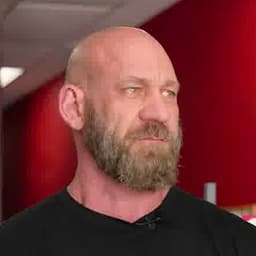
Rob Impastato owns Big Tex Gym in North Austin with his wife. The couple are ex-military and had worked in other gyms as personal trainers and managers before they bought the gym they trained at when its owner went bankrupt. Rob, who served in the Iraq war, also co-founded Iron Forge, a gym for streamers and gamers that grew out of letting a Twitch streamer film at Big Tex.

Big Tex Gym's own site (as of November 2026) calls it veteran-owned and says Rob and Esther took it over weeks from closing, after convincing the landlord to give them a shot. A powerlifter's EliteFTS post also names Rob and Esther as the owners. (said at 02:10, Big Tex Gym, About, EliteFTS: Goodbye Big Tex Gym)

Iron Forge Gym in Round Rock, Texas, lists Rob, Matt and Knut as its founders and says it was built in 2024. Gameland reported in February 2024 that Twitch streamers Mizkif (Matthew Rinaudo) and Knut started it and that Rob Impastato joined them. (said at 07:05, Iron Forge Gym, Gameland, February 2024)

Iron Forge Gym's site calls it the number one Panatta dealer in Texas, and Dexerto reported in January 2025 that the gym had partnered with Panatta. (said at 06:14, Iron Forge Gym, Dexerto, January 2025)

“I never really thought of a gym business as being something where I was trying to get rich off of it. That was never the goal. It was the goal to build it as a platform.”
Rob Impastato, Watch at 15:52