A restaurant franchise is commonly financed with an SBA-backed loan: 7(a) loans up to $5 million can pay for buying a business, equipment or working capital, SBA Express goes up to $500,000, 504 loans up to $5.5 million cover buildings and long-life equipment, and microloans go up to $50,000. Our count of the SBA's data finds 218 7(a) approvals to franchised full-service restaurants in fiscal 2026, with a median of $487,500.
Funding options for restaurant franchises
Funding type
Typical amount
Best for
Source
SBA 7(a) loan
Up to $5 million
Buying a restaurant (a full or partial change of ownership), equipment, working capital or refinancing; the program cap, not a typical approval.SBA: 7(a) loans
For a 7(a) loan, the SBA says the business must operate for profit in the U.S., be small under SBA size rules, not be an ineligible type of business, be creditworthy with a reasonable ability to repay, and be unable to get the credit on reasonable terms elsewhere. For a franchise, the lender also uses the SBA Franchise Directory to evaluate the eligibility of a business that operates under a franchise agreement. (SBA: lender programs)
Our count of the SBA's file finds 218 non-cancelled 7(a) approvals in fiscal 2026 to franchised full-service restaurants, totalling $155,899,000 from 96 lenders across 126 brands. The Huntington National Bank made the most (32), then Live Oak Banking Company (13) and U.S. Bank (8). 37 were to buy an existing restaurant. Taco Flats itself is not a franchise yet; these loans went to franchisees of other brands.
Non-cancelled 7(a) approvals, FY2026
218
Approved dollars
$155,899,000
Median approval
$487,500
Median starting rate
9.00%
Median term
120 months
To a restaurant not yet open
101
Approvals of $50,000 or less
23
Through SBA Express
40
Lenders that approved the most SBA 7(a) loans to full-service restaurants, franchised loans only in fiscal 2026
Lender
Loans
Approved
The Huntington National Bank
32
$13,685,000
Live Oak Banking Company
13
$10,255,000
U.S. Bank, National Association
8
$1,018,600
Fifth Third Bank
7
$5,803,000
First Bank of the Lake
6
$9,808,000
Our count: ApprovalFY 2026, NAICS 722511 rows with a franchise code, excluding 19 cancelled; lenders ranked by number of loans. Approvals, not disbursements; 7(a) only. Franchised limited-service restaurants (NAICS 722513) add 876 more. FY2020 to FY2026: 1,716 non-cancelled franchised full-service approvals. Source: SBA 7(a) FOIA file, as of September 30, 2026, data as of September 30, 2026.
On The Deal
Taco Flats said it wanted partners and expertise more than a set amount. Nathan Latka offered $1 million at the operating company for 30%, about 0.8 times annual revenue; the owners countered at 20%, then 25%. His final offer, $1 million for 25% of the holding company plus 100% of the royalties from franchising the two breakeven stores until the $1 million is repaid, was accepted on camera; the recording doesn't show a signed agreement or the money arriving. Watch at 13:08Every funding moment in the episode
Sources checked November 17, 2026. Lenders change their terms; confirm amounts and rates with the lender before you apply.
Taco Flats is trying to replace falling drink sales with coffee and breakfast, launched where staff already start at 7 a.m., while two stores opened after COVID, when credit was cheap, only break even with the group's support. Nathan Latka suggested franchising those two stores, and after a dispute over valuing the business on revenue or EBITDA, the owners accepted $1 million for 25% of the holding company plus all the franchise royalties until his money is repaid.
Key takeaways
Drinks were 40 to 45% of sales at the first Taco Flats in its early years and are about 30% across the locations now, so the owners added coffee to win back the beverage sale and breakfast to sell across the day.04:28
They launched coffee at a location where tortilla production already brings staff in at 7 a.m., for about $25,000 to $30,000 of equipment, and a year in, sales are only trickling in, more to go than dine-in.03:34
Nathan argued a brand gets about five words, so Taco Flats should stand for tacos and its founders' story, and when he asked who ChatGPT shows for breakfast tacos in Austin, the answer was "Not us".10:29
Two stores opened in the same year after COVID, with about $260,000 raised, sell about $600,000 to $700,000 each and only break even because the group supplies their food, management and payroll.07:04
Nathan proposed selling those two stores to owner-operators who pay Taco Flats 5% to 10% of sales, with the central tortilla kitchen supplying them; the owners would sell Lakeway for a few hundred thousand dollars.14:05
After Nathan refused to price the business above 1x revenue, the owners accepted $1 million for 25% of the holding company plus 100% of the two franchises' royalties until the $1 million is repaid.18:30
Takeaways and lessons are Founderpath’s summary of this resource, checked against the transcript. Quotes are verbatim.
Select any point on the map to see the quote behind it, play that moment, or jump to the full lesson.
The playbook: 5 lessons from Taco Flats
Lesson 1 · Product-market fit & first customers
Test a new product on hours you already staff
Drinks were 40 to 45% of sales at the first location in its early years and are about 30% across the locations now, as people drink less. Taco Flats, first an 11 a.m. to midnight concept, launched coffee about a year before filming and breakfast plates and tacos about two months before.
1
Go after the purchase your customers are dropping, not a new customer.
“I mean, people are drinking less, but as a business, we're still trying to capture that sale of someone having a beverage.”
Going further: The added cost was one bartender-barista coming in an hour early, plus about $25,000 to $30,000 of equipment such as a water softener. The owners later put the breakfast investment at $60,000 and called the risk minimal because they are there all morning.
3
Early sales show where demand is, even when the total is small.
“And we think some of that is still training our customers. And the other part is we... While we're excellent at making tacos and we're excellent at making cocktails, we are still trying to be better at making coffee.”
Going further: Asked whether the coffee bet, which Nathan put at "a $30,000 bet times two", was paying off, the owners said not yet: sales are trickling in, and more come from to-go than dine-in.
Lesson 2 · Personal brand & LinkedIn
Narrow the brand to one promise and tell your story
The owners described becoming an all-day spot, with breakfast tacos, coffee and a collaboration with a local coffee brand at their East Side bar. Nathan Latka pushed back that customers give a brand about five words, and that the name already says tacos.
1
A brand that claims everything is remembered for nothing.
“You can't say we're the best breakfast taco, and we've got a pop up on the East Side, and we've got a coffee collaboration with three brands, and also we have a great margarita.”
Going further: Asked what they want to dominate, the owners chose "best tacos and margaritas". Nathan noted that coffee has major brands already, while the corn and flour tortillas run through every part of their day.
2
Your own history is the part a competitor can't copy.
“I think in the age of AI, storytelling is what wins. People wanna feel an emotional connection to whatever it is they're engaging with or they're consuming, putting in their bodies, food. The way you beat that is you lean into your story.”
Going further: The story the owners keep repeating is quality, such as squeezing their own lime juice, and Simon's wife said they had never thought of putting their own history, like old photos, on the walls.
3
Test your positioning where customers now ask for recommendations.
“But if I search breakfast tacos right now in ChatGPT in Austin, Texas, who's gonna pop up?”
Going further: The owners answered "Not us" and said they don't know how to move that forward.
Lesson 3 · Metrics & forecasting
Judge each location on its own numbers before the next
The first Taco Flats paid back its investors within its first three years. A second Taco Flats opened in 2019, then two more in the same year after COVID; those two sell about $600,000 to $700,000 each and are roughly breakeven only with support from the group.
Source: The Deal, Taco Flats episode. Each step is described in the episode; select a timestamp to play it.
1
Cheap credit makes a new location easy to fund, not easy to fill.
“We're not getting that that influx we thought we'd get for lunch and for dinner, and and they're maintaining, but we're also carrying them because we we support them with food and resources and management and payroll.”
Going further: The two opened about a month apart, when, the owners say, banks were giving money away at 2% or 3%, with about $260,000 raised for both.
2
A roll-up shares the winners' returns with the losers.
“The the newer stores have not paid off, which is why we did the roll up. Right? Instead of us being like, hey, we're gonna shut down Lakeway.”
Going further: Every location now sits under one holding company with one cap table. Nathan's summary: the good stories married to the bad ones still make a good story, but not as good as the two good ones alone.
3
When the debt ends with the lease, the exit date is clear.
“Because the debt the debt is right aligned with those leases ending, it just makes sense to to ride it.”
Going further: The two leases end in 2028, the owners expect the company to be debt free by the end of 2028, and the group's EBITDA is flat at about $160,000 to $180,000 because of these two stores.
Lesson 4 · Buying & selling companies
Sell a breakeven store to an operator who will build it
Nathan Latka asked whether the owners would franchise the business and sell the two breakeven stores to franchise owners. They had thought about it and said they would be open to it with the right structure.
From breakeven stores to franchise royalties
Two stores sell $600K to $700K each at breakeven13:44
Central kitchen supplies tortillas and ingredientsPlanned14:19
Royalties repay Nathan's $1M, then go to HoldCoPlanned18:51
Source: The Deal, Taco Flats episode. Only the first step has happened; the rest is the plan discussed on camera.
1
A store that breaks even for a group can be a whole business for one owner-operator.
“I mean, you find a young hustler that wants to be in business. Could you sell off the break? I mean, starting off with 600 k of annual sales and a great location and then having them focus only on that location, making it work.”
Going further: The owners would sell the Lakeway store for "a few hundred thousand" and part ways with it.
2
The franchisor earns from sales and from the kitchen that supplies them.
“You guys take five to ten percent of the revenue you service and their ingredients you're serving. This is the central production facility and you're servicing all these other locations.”
Going further: The tortilla room already makes about 2,000 tortillas, two or three times a week, for every Taco Flats and the restaurants they manage.
3
The first franchise agreement sets the terms for the ones after it.
“And then support whatever that entrepreneur is that's running each of those locations. And then make sure that the revenue stream back to you guys, your fr... your first franchise agreement is good for you.”
Going further: He floated 5%, 6% or 10% of sales coming back, which is where he said he could help most.
Lesson 5 · Funding & capital
Agree on one valuation method, then tie repayment to the risk
The owners said they were looking more for partners and expertise than for a set amount, and would rather take equity from someone who wants to take the ride with them. Nathan Latka opened with $1 million at the operating company for 30%, which he called 0.8 times annual revenue, or about three to three and a half million.
Going further: The owners' side countered at 20%, putting the business at about $5 million now and about $12 million three years ago, when EBITDA was strong; with EBITDA now flat, they agreed the price had to rest on revenue.
2
With flat earnings, Nathan held the price at or under one times revenue.
“I think going above a one x multiple on a business like this, I I think is too much.”
Going further: The royalties go to him until his $1 million is paid back, even if it takes ten years, then flow back to the holding company. He only gets it back if the two franchises work, and the owners accepted on camera.
How long royalties from two stores would take to return $1M Our arithmetic, using the $600,000 to $700,000 of annual sales the owners gave for each of the two stores, held flat, and the 5%, 6% and 10% rates Nathan floated. Ingredient sales, growth and any franchise fee are left out.
Royalty rate
Per store a year
Both stores a year
Years to return $1M
5%
$30,000 to $35,000
$60,000 to $70,000
About 14 to 17
6%
$36,000 to $42,000
$72,000 to $84,000
About 12 to 14
10%
$60,000 to $70,000
$120,000 to $140,000
About 7 to 8
Funding moments
The 23 moments where the conversation turns to how a growing business pays for growth, and the idea behind each one.
Franchising a weak store works when the brand has a following and a central kitchen can supply it, as Taco Flats has. A store that breaks even only because the group carries its food, management and payroll may not cover a royalty once an owner-operator runs it alone, and the repayment plan depends on finding franchisees at all: as Nathan put it, 5% of zero sales returns nothing. For a SaaS company the closest parallel is a product line or market, which rarely has a ready buyer.
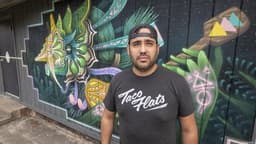
Simon Madera founded Taco Flats, an Austin taco restaurant that started on Burnet Road and now has four locations, a food truck and its own corn tortilla production, and he built La Holly, a bar on the East Side. His mother is a chef who started a catering outfit and then a small restaurant in a South Texas border town, and he grew up in that world. He and his wife, who was a regular at the first Taco Flats, own about 40% of the company together.
“So since my mom had all this knowledge of making food and started a little a little catering outfit, right, than a little restaurant. I grew up in that in that world.”