Skip to resource content
Get Funded Before ChristmasReserve
Founder conversation

Funding for Bowling Alleys: How Bowlski's Stages Expansion Debt

Bowling alleys can use SBA 7(a) loans for equipment and working capital, 504 financing for qualifying fixed assets, or microloans for smaller purchases. Craig Spivey accepts a staged debt offer to test balcony activities.

Craig Spivey · Bowlski's

Published May 27, 2026
About this resource
Format
The Deal
Length
12 min video
Inside
4 lessons, 7 funding moments and a mind map
Subscribe on YouTubeRead the full transcript

Funding for bowling alleys

Bowling alleys can use SBA 7(a) loans for equipment and working capital, 504 financing for qualifying fixed assets, or microloans for smaller purchases. Our count of SBA data finds 33 non-cancelled 7(a) approvals for bowling centers in fiscal 2026, totaling $49,238,300.

Funding options for bowling alleys
Funding typeTypical amountBest for
SBA 7(a)Up to $5 millionSBA states: machinery, equipment, working capital, eligible acquisitions and property improvements.SBA 7(a) program
SBA microloanUp to $50,000SBA states: smaller equipment, fixtures or working-capital needs; excludes real estate and existing debt.SBA microloans
SBA 504Up to $5.5 million, SBA portionSBA states: qualifying buildings and long-lived equipment; excludes working capital and inventory.SBA 504 program

SBA states that 7(a) lenders assess creditworthiness and reasonable repayment ability. Credit history, cash flow, equity and collateral may be considered; application documents depend on the lender and loan. (SBA lender origination guidance)

SBA 7(a) loans to bowling centers, fiscal 2026

Our count: 33 non-cancelled approvals totaling $49,238,300 across 28 lender names. Five lenders tie for the most approvals at two each; this is activity, not a lender recommendation.

Approvals of $50,000 or less
5
Median approved amount
$1,265,000
Median initial rate, not APR
8.75%
Median term
204 months
Startup, funds will open business
5
SBA Express approvals
10
Distinct lender names
28
Lenders that approved the most SBA 7(a) loans to bowling centers in fiscal 2026
LenderLoansApproved
FDIC - Community Bank & Trust-West Georgia2$3,317,000
First Bank2$2,445,000
Provident Bank2$4,370,000
The Huntington National Bank2$570,000
Zions Bancorporation, National Association2$2,897,000

Our calculation: ApprovalFY 2026, NAICS 713950, excluding 2 CANCLD rows from 35 records. Approvals and commitments, not disbursements or approval odds; 7(a) only, excluding 504 and microloans. Lenders ranked by approval count, ties alphabetically. Initial rates are historical, not current quotes. Source: SBA 7(a) FOIA loan-level data, data as of September 30, 2026.

On The Deal

Craig accepts Nathan's $100,000 offer on camera, with 1.5x total repayment over three years. Nathan also offers a possible $50,000 second tranche at the same multiple and term. The money would test balcony activities; no signed closing or disbursement is shown. Watch at 08:38 Every funding moment in the episode

Sources checked November 17, 2026. Lenders change their terms; confirm amounts and rates with the lender before you apply.

Bowlski's keeps waiting bowlers in its bar and balcony, while testing activities that could earn more from the space it already has. Craig Spivey accepts Nathan Latka's $100,000 debt offer after agreeing to start with one level rather than fund the whole expansion at once.

Key takeaways

  • Craig bought a closed bowling alley in Mineola, moved its 1950s and 1960s machines, and rebuilt them inside a leased theater. 01:18
  • On Friday and Saturday nights, bowling waits reach three or four hours; the balcony keeps guests there until lanes become available. 03:33
  • Craig has tried a video-game party suite and a golf simulator upstairs, and says he still cannot get enough people up there. 07:33
  • He says $100K could activate one level first, with further expansion if that works. 10:21
  • Craig accepts a $100K offer with 1.5x total repayment over three years; Nathan also offers a possible $50K second tranche at the same multiple and term. 11:09

Takeaways and lessons are Founderpath’s summary of this resource, checked against the transcript. Quotes are verbatim.

Mind map

Everything in this resource on one page

Bowlski's

Select any point on the map to see the quote behind it, play that moment, or jump to the full lesson.

The playbook: 4 lessons from Bowlski's

Lesson 1 · Funding & capital

Reuse assets before commissioning new ones

Craig came to the theater in 2018 and leased the building. He moved equipment from another closed venue while working around protected artwork and the facade.

  1. Craig rebuilt a closed bowling alley inside the theater.

    “So we went and bought a whole bowling alley in Mineola that had been closed. So the machines are actually from the fifties and sixties.”

    Craig Spivey, Watch at 01:18

    Going further: The recording gives no price comparison with new equipment. Reuse here shows how Craig assembled the operation, not proof that used equipment always costs less.

  2. The lease and protected features limited what Craig could change.

    “I have a lease here on the building. Artwork up here is protected, so I was kind of limited on what I could do.”

    Craig Spivey, Watch at 01:39

    Going further: He says the interior was renovated, restored or assembled from existing venues. A software founder can similarly separate reusable assets from constraints before committing capital.
Lesson 2 · Retention & expansion

Keep waiting customers inside the experience

Bowling is the destination, but weekend waits can last three or four hours. Craig uses the bar and upstairs activities as places for people to stay until they can bowl.

  1. Craig offers other areas while customers wait for bowling.

    “Friday and Saturday night, we'll be on a three, four hour wait. You know, we do have spillover opportunity in bar and other areas, but people ultimately come here to bowl.”

    Craig Spivey, Watch at 03:33
  2. Craig describes the upstairs games as a way to retain bowlers.

    “It's keeping them here so that I can get them on the lanes after.”

    Craig Spivey, Watch at 07:28

    Going further: Do not judge a supporting feature only by its direct receipts. Track whether the waiting customer reaches the core paid activity, while keeping that measurement separate from an assumed causal lift.

  3. Craig sells the syringe shots for $7 and quotes a cost under $1 to make them.

    “These are $7 a piece.”

    Craig Spivey, Watch at 04:45

    Going further: Craig answers 'Under a dollar' on making the shot, then separately mentions a 50-cent syringe. Treat the cost boundary as ambiguous; the episode does not establish all-in margin after packaging, labor and overhead.

Lesson 3 · Product-market fit & first customers

Test unused capacity with customers you already have

The balcony has hosted a video-game party suite, a golf simulator and dart suites. Craig says those experiments have not brought enough people upstairs, so he proposes mini bowling and children's parties.

The proposed balcony test

  1. Add activities for current guestsPlanned08:38
  2. Start with one level at $100KPlanned10:21
  3. Expand further only if successfulPlanned10:28
Craig describes this as a plan. No post-investment result is shown.
  1. Craig has tried several upstairs formats without attracting enough people.

    “So I had video game, party suite. I had a golf simulator.”

    Craig Spivey, Watch at 07:33

    Going further: His proposed next use is a hypothesis, not a demonstrated expansion result. Keep the existing demand for bowling separate from the unproven demand for upstairs activities.

  2. Craig wants more activities for guests who already come to the venue.

    “I would add additional activities for my guests that are already here that are already coming here. I would add additional games.”

    Craig Spivey, Watch at 08:38

    Going further: Mini bowling could move children upstairs and leave more downstairs capacity for adults buying drinks, according to Craig's plan. The interview does not show that outcome happening.

Lesson 4 · Funding & capital

Stage the debt and compare total repayment

Craig initially discusses roughly $200K-$250K for the expansion and a two-to-five-year payback period. Nathan calls the upstairs project an experiment and proposes lending against this location's whole business, rather than relying only on new upstairs sales.

  1. Craig says he can begin with $100K and expand only if it succeeds.

    “Well, I mean, I think I could obviously start with it on the 100 k. So, you know, I could add some down here on just this one level. If it's successful, I could obviously grow up into... Further up.”

    Craig Spivey, Watch at 10:28
  2. Nathan proposes debt against the whole business at this location.

    “So if I made you an offer that was debt, not equity, the payback schedule, I'd I'd be loaning against the whole business, like this location. Would you be open to that or no?”

    Nathan Latka, Watch at 09:22

    Going further: Craig's earlier idea was to direct all new upstairs revenue toward the investment. The final offer does not specify a revenue-share percentage, collateral, personal guarantee or payment frequency, so do not infer those terms.

  3. The final offer is $100K with total repayment of 1.5x over three years.

    “I'll give you a $100,000 cash today. The company will pay it back over three years until I'm paid back 1.5 x my investment. Do we have a deal?”

    Nathan Latka, Watch at 11:09

    Going further: Craig asks about needing more, and Nathan offers a possible extra $50K tranche at the same multiple over three years. Acceptance is on camera; no closing documents or disbursement are shown.

The repayment choices discussed Our arithmetic using cue-121 and cue-124: principal multiplied by the stated repayment multiple. These are total repayment amounts, not APRs; fees, payment frequency and a two-year term for 1.3x are not specified.

Timing statedMultipleTotal on $100KCost above principal
Within one year, discussed1.15x$115,000$15,000
More time, term unspecified1.3x$130,000$30,000
Three years, final offer1.5x$150,000$50,000

Funding moments

The 7 moments where the conversation turns to how a growing business pays for growth, and the idea behind each one.

  1. 02:05Non-dilutive capital
    “So we were under a million bucks. We were a live music venue, so we were able to get a really good, nice grant, which kept us open during COVID.”
    Craig Spivey
    Non-dilutive funding →
  2. 08:27Collateral and debt terms
    “COVID. The COVID loan. But those are usually like thirty year 3% super cheap. Right. Right? Right. Okay. Absolutely.”
    Craig Spivey and Nathan Latka
    Debt financing →
  3. 08:59Revenue-based financing
    “So, you know, if we were able to monetize this, I could take a 100% of the revenue up here, put it back towards that investment, and then, of course, I would get the residual revenue from the beers, the bowling, or whatever I get afterwards to be able to take care of my investors and my business expenses here.”
    Craig Spivey
    Revenue-based financing →
  4. 09:22Collateral and debt terms
    “So if I made you an offer that was debt, not equity, the payback schedule, I'd I'd be loaning against the whole business, like this location. Would you be open to that or no?”
    Nathan Latka
    Debt financing →
  5. 09:55Collateral and debt terms
    “Between two and five years on the investment back here.”
    Craig Spivey
    Debt financing →
  6. 10:38Early repayment
    “If you pay it back within a year, I get back a 1.15 x multiple. So it costs you $15,000 on 100 grand. Sure. If you need more time though, obviously my money's at risk longer. I would increase that to like a 1.3 x. Okay. Or if you needed three years, we do something like a 1.5 x.”
    Nathan Latka and Craig Spivey
    Debt financing →
  7. 11:09Collateral and debt terms
    “I'll give you a $100,000 cash today. The company will pay it back over three years until I'm paid back 1.5 x my investment. Do we have a deal? So what if I need a little bit more? What if I get to the 150 and 100 is not enough for me to completely get what we need to be able to pay you back? Well, I don't wanna write necessarily endless checks. But if you... If you needed an extra 50 k, I could basically do another tranche at the same cost of capital if and when you need it. So another 50 k paid back over three years and time paid back 1.5 x. I'm interested in that deal.”
    Nathan Latka and Craig Spivey
    Debt financing →
Non-dilutive capital

Growth money without giving up equity

Founderpath provides non-dilutive capital for bootstrapped SaaS founders from $10K MRR: funded in 24 hours, no equity, no board seats.

See your funding offerNo pitch deck required

Bowlski's by the numbers

FigureValueWhen said
Vintage equipment reused1950s and 1960s01:18
Weekend bowling wait3-4 hours03:33
Shots made per week, Craig estimatesAbout 30004:06
Bowling share, Craig estimates40-45% of revenue04:29
Bar share, Craig estimatesAbout 30% of revenue04:29
Shots share of bar revenue, estimatedAbout 20%04:36
Syringe-shot selling price$7 each04:45
Shot making cost, packaging scope unclearUnder $104:46
Syringe cost, separately statedAbout $0.50 each04:50
First-level expansion test$100K10:21
Payback period Craig considers2-5 years09:55
Final offer total repayment multiple1.5x over 3 years11:09

Where this may not work for you

Bowlski's already has customers waiting for a scarce physical activity, so nearby games can serve as a holding area. A software product without existing demand cannot assume an adjacent feature will create it. Craig's balcony experiments had not attracted enough people, and the mini-bowling plan remained untested in the recording. The on-camera debt offer is an accepted proposal, not evidence of closing, funding or later expansion results.

Keep learning these skills

The same skills, taught by other founders.

Resource files

About the speaker
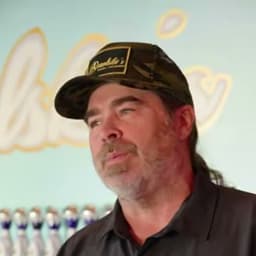
Craig Spivey

Craig Spivey

Owner · Bowlski's

Craig Spivey runs Bowlski's, a bowling, bar and food venue in Dallas's Lakewood Theater. He says he came to the leased theater in 2018, moved in bowling equipment from a closed venue and later added a pizza franchise.

The DoubleDave's Lakewood listing places its pizza operation inside Bowlski's at the historic Lakewood Theater; Bowlski's own site also links its DoubleDave's service. Checked November 17, 2026. (said at 03:21, DoubleDave's Lakewood location, Bowlski's official site)

“If it's successful, I could obviously grow up into... Further up.”
Craig Spivey, Watch at 10:28