NextView Ventures Review: Dilution & Alternatives
If you're evaluating NextView Ventures, weighing the cost of a seed round, or searching for non-dilutive alternatives to NextView, this guide compares NextView's equity terms against top non-dilutive financing providers including Founderpath, Capchase, Lighter Capital, Pipe, and SaaS Capital.
Compared in this guide







How Much Does the NextView Slice Cost at Exit?
Keep 100% equity. Save $12,959,500.
TL;DR
What is NextView Ventures?
NextView Ventures is a seed-stage venture capital firm founded in 2010 by Rob Go, David Beisel, and Lee Hower, with offices in Boston, New York, and San Francisco. NextView invests across consumer, SaaS, marketplaces, fintech, healthcare, and commerce infrastructure, with a thesis built around “everyday economy” problems and AI applied to real-world industries.
Per NextView's public approach page, initial check sizes range from $250K to $4M with reserved follow-on capital. The firm leads “the majority of our rounds” and “usually take[s] board director or observer seats.” Per TechCrunch, NextView has “invested in more than 173 startups since launch” and added Stephanie Palmeri (formerly of Uncork Capital) as an equal partner in October 2022.
Per the NextView blog, notable exits include TripleLift, Skillz, Drift, ThredUp, and Parsec; active growth-stage portfolio companies include Attentive, Grove Collaborative, WHOOP, Bobbie, and Devoted Health.
Many SaaS founders search for NextViewalternatives because they have recurring revenue and don't need to sell 10–20% of their company to fund growth. Non-dilutive providers like Founderpath serve founders with $100K+ in annual revenue (or $3M+ ARR for the Term Loan) who want to keep their equity and skip the 4–8 week pitch process. This guide compares NextView's terms against the top non-dilutive alternatives side by side.
How NextView Works
NextView invests through standard preferred-stock financings. A typical NextView round proceeds in roughly six steps: (1) warm introduction from a known contact or portfolio CEO, (2) first partner meeting, (3) follow-up diligence and partner-meeting pitch, (4) term sheet, (5) full legal diligence and document negotiation, (6) closing and wire. Industry-standard timing from first contact to wire is 4–8 weeks.
Per their public approach page, NextViewleads “the majority of our rounds” — meaningNextView negotiates the term sheet, sets the post-money valuation, takes a board director or observer seat, and drives diligence. Lead investors have outsized influence on governance and round structure. The standard NextView term sheet (not publicly disclosed but consistent with seed industry norms) includes 1× non-participating liquidation preference, pro-rata rights, an investor board seat or observer, information rights, ROFR, drag-along rights, and a refreshed option pool taken from pre-money.
By contrast, Founderpath uses two non-dilutive products: Revenue Purchase Agreements with fixed daily or weekly receivable purchases, and Term Loans with fixed monthly payments over up to 48 months. Founderpath funds in under 24 hours through automated diligence — no board seat, no pro-rata, no preferred stock.
Why Founders Look for NextView Alternatives
- 1.10–20% dilution to NextView per round. Partner Rob Go has publicly written that “seed funds of all sizes and flavors seem to be gravitating around a 10% ownership target” while “most series A funds are still targeting some sort of a range between 15–20%.” NextView writes $250K–$4M lead checks, so actual ownership depends on round size: $1.5M at the 10% target implies a $15M post-money round, while a $2M check on a $10M post-money round implies 20%. That stake compounds at exit: even a 15% slice of a $100M exit is $15M toNextView.
- 2.Series A piles on another 20–25%. Rob Go has written that Series A dilution is “usually in the 25% range, and certainly at least 20%.” Combine that with the seed-round dilution plus option pool refreshes (Rob Go writes that Series A option pools typically sit between 7% and 15%) and founders typically hold less than 50% of common stock by Series A close.
- 3.4–8 weeks of pitching. A typical seed round takes 4–8 weeks from first partner meeting to wire: warm intros, partner pitch, follow-up diligence, term sheet, legal diligence, document execution. Founderpath wires funds in under 24 hours.
- 4.Board seat and ongoing reporting. NextView's own approach page states they “usually take board director or observer seats.” That means quarterly board meetings, formal financial reporting, and an investor with veto rights on key decisions (M&A, financings, charter changes) for the life of the company.
- 5.Pro-rata and ROFR obligate future raises.Standard seed term sheets include pro-rata rights (the right to maintain ownership in future rounds) and rights of first refusal on secondary transactions. Once you take VC seed capital, you've committed to running the Series A and beyond playbook — even if your revenue would let you skip future rounds entirely.
- 6.Liquidation preference squeezes small exits. Standard 1× non-participating preferred stock pays back the original investment to NextView first in any sale below the preferred-stock price. In small-exit scenarios, founders can end up with significantly less than their proportional common-stock ownership would imply.
- 7.Legal fees of $10K–$30K to close. Preferred-stock financings typically run $10K–$30K in founder-side legal fees alone (more for complex deals). Founderpath has no legal fees and no closing costs.
Top 7 NextView Alternatives for SaaS Founders in 2026
The most relevant NextView alternatives for SaaS founders are non-dilutive financing providers that fund recurring-revenue businesses without taking equity. Below we compare the top alternatives on pricing, dilution, and funding speed.
# | Company | Best For | Dilution | Funding Speed |
|---|---|---|---|---|
1 | Founderpath | SaaS, subscription businesses | 0% — non-dilutive debt | Under 24 hours |
2 | Capchase | SaaS subscription advances | 0% — non-dilutive | 48 hours |
3 | Lighter Capital | B2B SaaS revenue-based | 0% — non-dilutive | 3–4 weeks |
4 | Pipe | SaaS with annual contracts | 0% — non-dilutive | 2–5 days |
5 | SaaS Capital | Growth-stage SaaS ($3M+ ARR) | 0% — non-dilutive | 2–4 weeks |
6 | Arc Technologies | VC-backed startups | 0% — non-dilutive credit | 1–2 weeks |
7 | Other seed VCs | Pre-revenue, swing-for-fences | 10–20% — equity dilution | 4–8 weeks |
Founderpath is the only NextView alternative on this list that offers both a Revenue Purchase Agreement and a Term Loan with 0% dilution, no board seat, no closing costs, and funding in under 24 hours.
Founders comparing NextView also evaluate Founderpath vs Capchase, Founderpath vs Lighter Capital, and Founderpath vs Pipe.
Pros and Cons of NextView Ventures
Pros
 Funds pre-revenue startups. NextViewexplicitly invests “before meaningful traction,” making them a fit for first-time founders without revenue.
- Active partner involvement. Each partner does 2–3 new investments per year, which means concentrated time, hands-on support, and direct access to a partner — not an analyst.
- Will lead rounds. NextViewleads “the majority” of their rounds, which can simplify the fundraising process for first-time founders.
- Reserved follow-on capital. NextView's Fund V includes a $65M “All Access I” opportunity fund for follow-on rounds.
Cons
 10–20% dilution per round. You permanently sell a major chunk of your company. At a $100M exit, a 15% slice is $15M to NextView.
- Board seat and reporting. Investor director or observer for the life of the company, with quarterly board meetings and formal financial reporting.
- 4–8 weeks of pitching. Warm intros, partner meetings, full-partnership pitch, term sheet, legal diligence — weeks of founder time before any wire.
- Compounding dilution at Series A.Series A typically takes “25% range, at least 20%” (Rob Go) on top of the seed dilution and option pool refreshes.
- Liquidation preference on small exits. 1× non-participating preferred takes investment back first, squeezing common-stock returns in below-preferred sales.
- Legal fees of $10K–$30K. Preferred-stock financings carry meaningful founder-side legal costs even before any cash hits your account.
What Is the Best NextView Alternative for SaaS Founders?
For SaaS and subscription founders with recurring revenue, Founderpath is the most direct NextView alternative because it delivers the same capital outcome (cash on the balance sheet to fund growth) without the equity, board seat, or pro-rata obligations of a seed round. Founderpath offers:
- 0% dilution — keep 100% of equity
- No board seat, no observer, no governance
- Funding in under 24 hours
- Two products: Revenue Purchase Agreement and Term Loan (up to 48mo, IO options)
- From a 7% flat discount fee scaling per year (RPA) / from 14% APR (Term Loan)
Other NextView alternatives include Capchase, Lighter Capital, Pipe, SaaS Capital, and Arc Technologies — all non-dilutive but with varying pricing, timelines, and contract terms.
NextView Pricing Explained
NextView's “price” is the equity stake they take in exchange for capital, not an interest rate or fee. NextView's own approach page states initial check sizes range from $250K to $4M; partner Rob Go has publicly noted that “seed funds of all sizes and flavors seem to be gravitating around a 10% ownership target” while Series A funds target 15–20%. In practice, a NextView lead check of $1.5M into a $10M post-money round leaves NextView with 15% of the company — a stake worth $15M at a $100M exit and $37.5M at a $250M exit.
On top of the equity dilution, founders pay $10K–$30K in legal fees to close a preferred-stock financing (industry standard) and commit to multi-year governance obligations: board seat or observer, pro-rata, ROFR, drag-along, information rights, protective provisions on M&A and charter changes, and option pool refreshes that compound dilution at each subsequent round.
Series A dilution compounds the cost. Rob Go has written that Series A dilution is “usually in the 25% range, and certainly at least 20%” and that Series A option pools sit in a 7–15% range. Stacked on top of a 20% seed round, founders typically hold less than 50% of common stock by Series A close.
Founderpath's pricing is explicit and bounded: Revenue Purchase Agreements start from a 7% flat discount fee scaling per year. A 12-month RPA costs 7% of the funded amount; a 24-month RPA costs 14%. Founderpath Term Loans start at 14% APR with up to 3 years of interest-only payments. No equity, no board seat, no closing costs — and the relationship ends when you finish repayment.
Is Founderpath Cheaper Than NextView?
For SaaS founders with revenue, yes — by a large margin in every realistic outcome. The cost of equity is the equity slice at exit; the cost of debt is the interest paid over the loan term. At a $100M exit, a 15% NextView stake is worth $15M to NextView. A Founderpath Term Loan of $1.5M at 16% APR over 48 months costs ~$540K in total interest — a 28× difference in cost.
Scenario 1: $1.5M capital, 15% dilution, $100M exit. NextView's 15% slice is worth $15M at exit. A Founderpath Term Loan of $1.5M at 16% APR / 48 months costs ~$540K in interest (total repayment ~$2.04M). Net savings to founder: $12.96M plus 100% of equity retained.
Scenario 2: $1.0M capital, 20% dilution, $50M exit. A 20% NextView slice at $50M is worth $10M. A Founderpath Term Loan of $1M / 16% / 48mo costs ~$360K in interest (total repayment ~$1.36M). Net savings: $8.64M plus 100% of equity retained.
Scenario 3: $2.0M capital, 20% dilution, $250M exit. NextView's 20% stake at $250M is worth $50M. A Founderpath Term Loan of $2M / 16% / 48mo costs ~$720K in interest (total repayment ~$2.72M). Net savings: $47.28M plus 100% of equity retained.
Use the cost calculator below to model your specific capital amount, expected dilution, and exit valuation — or open the full dilution calculator to model compounding dilution across multiple rounds with option pool refreshes. Note: this comparison assumes you have the revenue to qualify for Founderpath (typically $100K+ ARR for RPA and $3M+ ARR for Term Loan). True pre-revenue, pre-product startups generally do not have a non-dilutive option —NextView or another seed VC is the realistic path there.
NextView Dilution vs Founderpath Cost Calculator
Enter capital raised, expected dilution, and your projected exit valuation. See NextView's equity slice at exit side-by-side with Founderpath's RPA and Term Loan for the same dollar amount. For multi-round dilution modeling across seed, Series A, and Series B with option pool refreshes, open the full Founderpath dilution calculator.
NextView Seed Round Inputs
Model what NextView's equity slice costs at exit vs Founderpath's RPA and Term Loan for the same dollar amount.
Capital Raised ($)
15.0%
$100M
Cost Comparison at Exit
NextView's equity slice vs Founderpath's two non-dilutive products for the same dollar amount.
NextView Equity
$15,000,000
$13,500,000
$10M
Exit only
Founderpath RPA (24 months)
$1,710,000
$210,000
$71,250/mo
0%
Founderpath Term Loan (48 months)
$2,040,500
$540,500
$42,510/mo
0%
$13,290,000
by choosing the cheaper Founderpath product over a 15.0% NextView round at this exitNextViewcost is modeled as ownership percentage × exit valuation. Founderpath Term Loan assumes a conservative 16% APR by default — Founderpath's actual published starting rate is 14% APR, so a real Founderpath offer would typically be cheaper than the modeled comparison. Equity cost includes the full slice paid to NextView at exit (which includes return of the original investment via the 1× non-participating liquidation preference). Actual NextView terms vary by deal and are not publicly disclosed in a standard rate card.
Disclaimer: This calculator is for illustrative and educational purposes only. It does not represent an actual NextView offer, term sheet, or financing. All figures are hypothetical estimates based on publicly available information and user-provided inputs. Actual NextView terms may differ significantly. Founderpath is not affiliated with NextView and makes no representations about NextView's current investment terms. Consult directly with any investor or financing provider before making decisions.
NextView Reviews (2026)
NextView Ventures, like most venture capital firms, does not maintain an active public review profile on Trustpilot, G2, or Capterra. The most credible third-party perspectives on NextView come from editorial coverage by TechCrunch, a Harvard Business School case study, and a long body of partner-authored writing on the NextView Ideas blog and personal blogs (Rob Go at robgo.org, David Beisel at genuinevc.com). Founders evaluating NextView typically reference-check with current and former portfolio CEOs directly rather than rely on review sites.
Pricing
- Check size: $250K–$4M initial
- Typical dilution: 10–20% per round
- Legal fees to close: $10K–$30K (industry standard)
- Governance: board seat or observer
Timeline & Process
- First meeting to wire: 4–8 weeks industry standard
- Investment pace: high-conviction, concentrated portfolio
- Stage focus: pre-seed and seed, “before meaningful traction”
- Geography: North America
What Founders Say About Founderpath

Erik Pfannmöller
Founder of Solvemate
Our competitors raised VC. We kept 100% and doubled MRR with Founderpath
“We first took Founderpath capital back in May 2021. Since then we've nearly doubled our MRR and kept 100% equity. We're in a competitive space (customer support SaaS) with competitors raising tons of VC. It makes me happy inside that I'm able to compete with them while keeping all our equity. Founderpath helps us grow faster without dilution.”


David Tabachnikov
Founder of ScholarshipOwl
After trying all the RBF platforms, Founderpath had the best terms
“After trying all the RBF platforms out there, we found Founderpath to be the best one to work with...”
NextView vs Founderpath: Full Comparison
Based on NextView's publicly available approach page, partner blog posts, TechCrunch reporting, and industry-standard seed term sheets. Rows marked with * reflect provisions standard in seed-stage preferred-stock financings across the industry — NextView does not publish its term sheet publicly.
Feature | NextView | Founderpath RPA | Founderpath Term Loan |
|---|---|---|---|
Capital structure | Preferred stock (equity) | Purchase of future receivables (not a loan, not equity) | Senior term loan (debt) |
Dilution to founders | 10–20% per round (typical seed-lead position) | 0% | 0% |
Board seat or observer | Yes — "usually take board director or observer seats" (NextView approach page) | No | No |
Time from first meeting to wire | 4–8 weeks industry standard for seed rounds * | Under 24 hours | Under 24 hours |
Legal fees to close | $10K–$30K founder-paid legal counsel for preferred-stock financing * | None | None |
Check size | $250K to $4M initial (NextView approach page) | Up to 4× MRR, scaling with revenue | Up to $5M+ based on ARR and metrics |
Liquidation preference | 1× non-participating standard for seed preferred stock * | Not applicable | Senior to equity but no preference stack |
Pro-rata rights on future rounds | Standard in seed term sheets * | None | None |
Right of first refusal (ROFR) | Standard in seed term sheets * | None | None |
Drag-along rights | Standard in seed term sheets * | None | None |
Option pool refresh (pre-money dilution) | Standard ask: refreshed pool taken from pre-money valuation * | Not applicable | Not applicable |
Monthly or quarterly reporting required | Standard info rights in preferred-stock financings * | Automated through platform integrations | Automated through platform integrations |
Personal guarantee | No | No | No |
Cost at $100M exit (on $1.5M raised) | $15M to NextView (15% slice) | ~$320K total fee on $1.5M / 12mo RPA | ~$540K total interest on $1.5M / 16% APR / 48mo |
Relationship ends when | Exit, IPO, or shutdown (multi-decade tail) | Final receivable purchased (typically 12–24 months) | Final payment made (24–48 months) |
Future-round consent rights | Standard protective provisions on financings, M&A, charter changes * | None | Standard senior-debt change-of-control consent |
Open to bootstrapped founders with revenue | Yes but unusual — NextView targets pre-traction startups | Yes — designed for $100K+ revenue businesses | Yes — designed for $3M+ ARR SaaS businesses |
Geographic availability | North America (US + Canada) | Worldwide | Worldwide |
Public Sources
- NextView Ventures Approach page. nextview.vc/approach — check size $250K–$4M, leads majority of rounds, usually takes board director or observer seat, North America focus, pre-seed and seed stage.
- Rob Go, “Some Thoughts on Ownership.” nextview.vc/blog/some-thoughts-on-ownership — seed funds gravitate to 10% ownership target while Series A funds target 15–20%.
- Rob Go, “Why Raise a Seed Round Instead of Jumping Straight to A.” robgo.org — Series A dilution “usually in the 25% range, and certainly at least 20%.”
- Rob Go, “Option Pools and VC Negotiations.” robgo.org — option pool refresh mechanics typical at seed and Series A.
- Connie Loizos, “NextView Ventures' new $200 million fund comes with a side of San Francisco,” TechCrunch, October 2022. techcrunch.com — Fund V $135M seed + $65M All Access I = $200M total; Stephanie Palmeri joined from Uncork Capital as equal partner; “invested in more than 173 startups since launch.”
- Rob Go, “Announcing NextView IV,” NextView blog, January 27, 2021. nextview.vc/blog/announcing-nextview-iv — Fund IV $100M close; Fund III sized at $50M; “pre-traction companies represent the vast majority of our investments.”
- “The Next Chapter for NextView,” NextView blog. nextview.vc/blog/the-next-chapter-for-nextview — confirmed portfolio exits (TripleLift, Skillz, Drift, ThredUp, Parsec) and active growth-stage holdings (Attentive, Grove Collaborative, WHOOP, Bobbie, Devoted Health).
- “NextView Ventures raising up to $135M for sixth fund,” VCWire, February 2025. vcwire.tech — Fund VI targeting up to $135M, SEC Form D filing.
- S&P Global, “NextView Ventures raises $100M for fourth fund,” January 2021. spglobal.com — Fund IV $100M close.
- David Beisel, “Atomization of Seed Rounds Part II,” GenuineVC, June 2016. genuinevc.com — pre-seed framing as “minimizing net dilution.”
- SEC Investment Adviser Public Disclosure. adviserinfo.sec.gov/firm/summary/161199 — NextView Ventures CRD #161199, registration history.
- NextView Ventures Team page. nextview.vc/team — current partner roster including Rob Go, David Beisel, Lee Hower, Melody Koh (former Head of Product at Blue Apron), and Stephanie Palmeri (former partner at Uncork Capital).
- NextView Ventures Investments page. nextview.vc/investments — current portfolio listing.
Industry-Standard Provisions
* Rows marked with an asterisk reflect provisions that are standard in seed-stage preferred-stock term sheets across the venture capital industry. NextView does not publish their standard term sheet, and individual deal terms vary. We recommend requesting the full term sheet and stock purchase agreement, and having an experienced startup attorney review it, before signing with any seed VC. If any information on this page is inaccurate, contact us at hello@founderpath.com and we will promptly review and update.
NextView Ventures Overview
Investment
- Stage
- Pre-seed and seed
- Check
- $250K–$4M initial
- Lead?
- Leads majority of rounds
- Board
- Director or observer seat
- Dilution
- 10–20% typical seed-lead position
Timeline & Requirements
- Time
- 4–8 weeks industry standard
- Portfolio
- 173+ since launch (per TechCrunch)
- Traction
- “Before meaningful traction”
- Geo
- North America
- Sectors
- Consumer, SaaS, marketplaces, fintech, health, commerce
Company Facts
- Founded
- 2010
- Founders
- Rob Go, David Beisel, Lee Hower
- Partners (current)
- Rob Go, David Beisel, Lee Hower, Melody Koh, Stephanie Palmeri
- Offices
- Boston, New York, San Francisco
- Portfolio
- 173+ companies including TripleLift, Skillz, Drift, ThredUp, Attentive, WHOOP, Bobbie
- SEC CRD
- 161199
NextViewVentures Funds & LP Capital
NextViewhas raised six funds since 2010. The firm grew steadily from a ~$21M Fund I to a $200M Fund V in October 2022 (per TechCrunch), and per VCWire began raising Fund VI in February 2025 targeting up to $135M. Fund III at $50M and Fund IV at $100M are documented in NextView's own Fund IV announcement (January 2021). Disclosed capital across Funds III through V totals roughly $350M, with Fund VI adding up to $135M when it closes. NextView is registered with the SEC as an investment adviser under CRD #161199.
Fund | Size | Date | Notes |
|---|---|---|---|
Fund I | ~$21M | 2011 | Seed-stage debut fund (single-source via vcsheet) |
Fund II | ~$40M | 2014 | Continued pre-seed / seed strategy (single-source via vcsheet) |
Fund III | $50M | 2016 | Per NextView announcement at Fund IV close |
Fund IV | $100M | Jan 2021 | First $100M+ vehicle. Per S&P Global and NextView blog |
Fund V + opportunity fund | $135M seed + $65M All Access I = $200M | Oct 2022 | Added Stephanie Palmeri (San Francisco) as fifth GP. Per TechCrunch |
Fund VI (raising) | Up to $135M target | Feb 2025 filing | Per VCWire and SEC Form D/A |
NextView's structure is the standard 2-and-20 venture capital fund: a 2% annual management fee on committed capital plus 20% carried interest on profits above the LP hurdle rate. Because seed funds depend on a small number of large exits to clear that hurdle, NextView's economic model is structurally biased toward swing-for-the-fences outcomes that maximize exit valuation — not toward founder optionality or smaller, faster exits. NextView's portfolio has generated three IPOs (Skillz, ThredUp, and Grove Collaborative) and multiple acquisitions including TripleLift, Drift, and Parsec, all documented on the NextView blog.
Founderpath vs NextView: Which Is Right For You?
These are two different products for two different stages. NextView writes $250K–$4M equity checks into pre-revenue or very-early startups in exchange for 10–20% ownership and a board seat or observer. Founderpath underwrites six- and seven-figure non-dilutive debt against existing recurring revenue (a $1M–$5M+ headline range per the Founderpath term-loans page, scaled to ARR and metrics), with no equity, no governance, and funding in under 24 hours.
Choose NextViewif you are pre-revenue, building a swing-for-the-fences consumer or marketplace business that needs hands-on partner involvement, and you're willing to permanently sell 10–20% of your company plus accept a multi-year governance relationship. Choose Founderpath if you have recurring revenue (typically $100K+ ARR for RPA, $3M+ ARR for Term Loan), you want capital fast, and you want to keep 100% of your equity and skip the 4–8 weeks of pitching.
For SaaS founders specifically, the math heavily favors non-dilutive debt: even a 15% seed stake at a $100M exit costs $15M, versus ~$540K in interest on a $1.5M Founderpath Term Loan over 48 months. See the full NextView vs Founderpath comparison above for a row-by-row breakdown, or get a real Founderpath offer in under 24 hours.
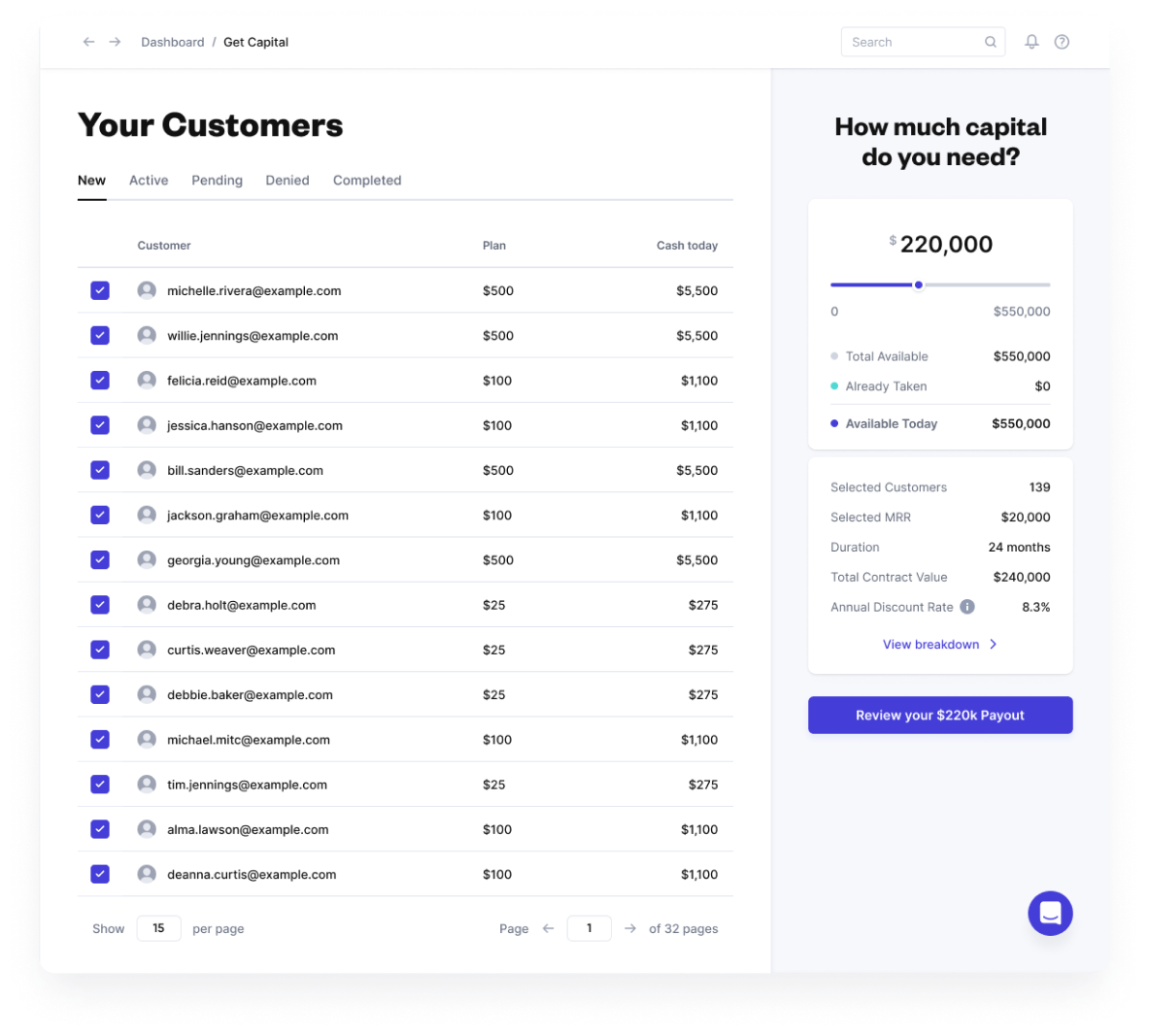
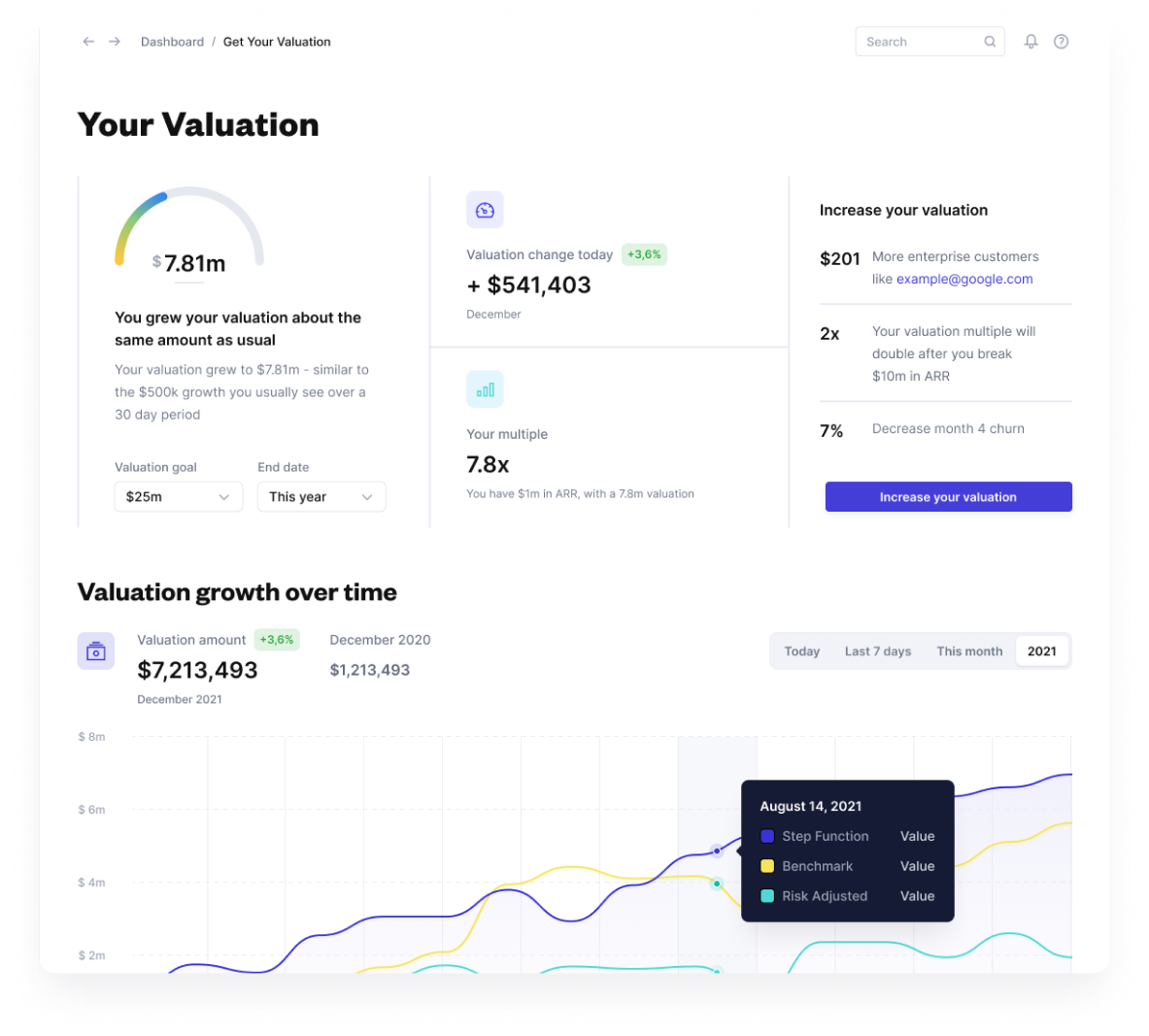
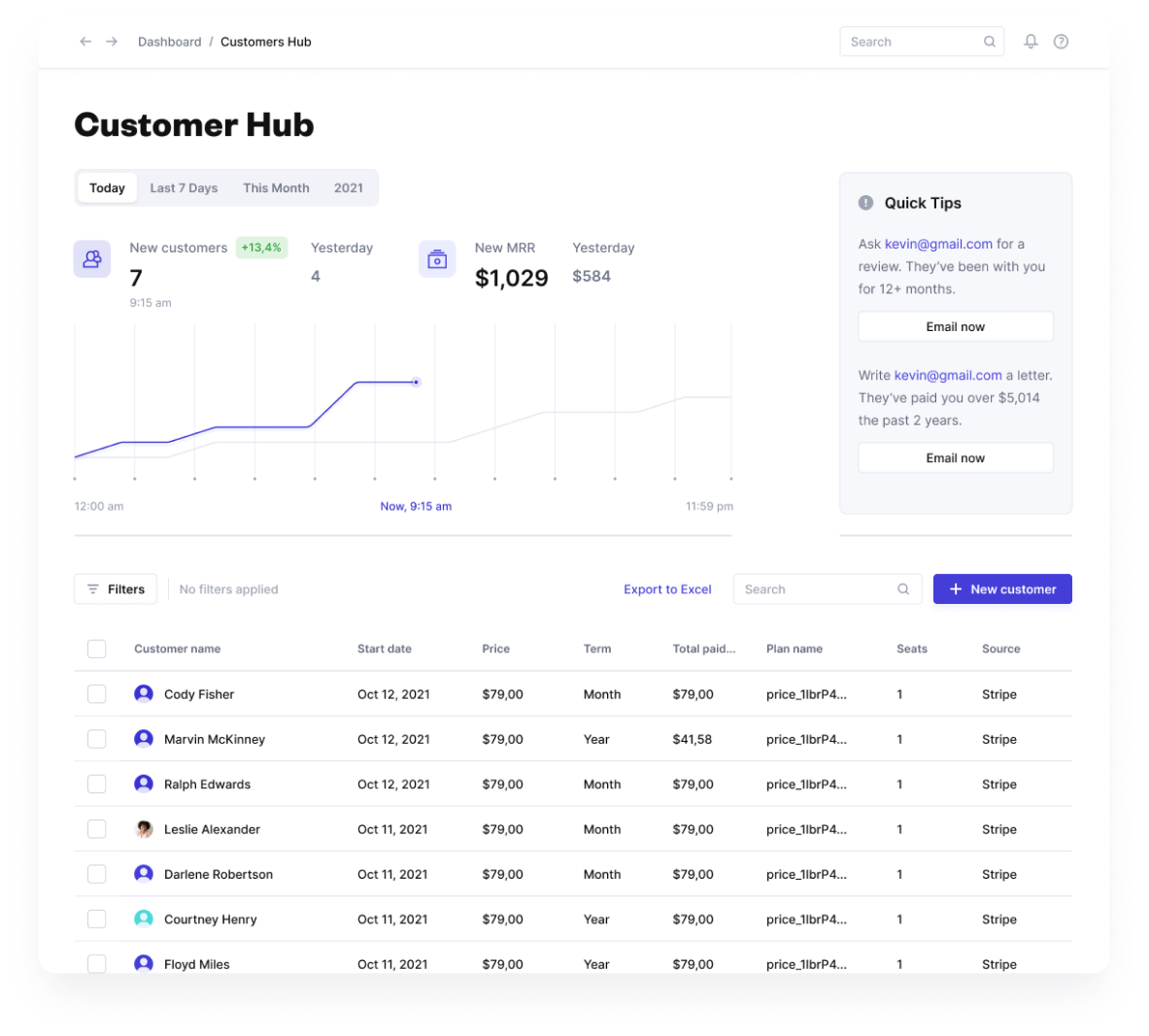
Founderpath is the Fastest Growing NextView Alternative
Frequently Asked Questions About NextView
Pros: 15+ year operating history with 6 funds and 173+ portfolio companies, partners with deep operating experience (ex-Blue Apron, ex-Uncork), strong track record of follow-on at Series A and beyond, $135M+ Fund VI in market, lead-investor positioning (drives term sheets), and access to a strong seed-stage network.
Cons: 10–20% equity dilution per round, board seat or observer required, 4–8 week pitching process, standard preferred-stock protections (1x non-participating liquidation preference, pro-rata, ROFR), 2-and-20 fund economics incentivize swing-for-the-fences outcomes, and total dilution compounds across rounds.
This comparison was written by the Founderpath team — direct operators with $271M deployed to 710++ founders — based on NextView's publicly available approach page, NextView Ideas blog, partner-authored writing on robgo.org and genuinevc.com, TechCrunch and S&P Global press coverage, VCWire reporting, and SEC adviser filings. Public sources are cited with links throughout and below the comparison table.
Disclaimer: Comparison-table rows marked with * reflect provisions that are standard in seed-stage preferred-stock financings across the venture capital industry. NextView does not publish their standard term sheet, and actual fees, ownership, board terms, and protective provisions vary by deal. We recommend that all founders request and carefully review the complete term sheet and stock purchase agreement, including all schedules and ancillary documents, before signing with any seed VC. If you believe any information on this page is inaccurate, please contact us at hello@founderpath.com and we will promptly review and update.
Get a Founderpath Offer in Under 24 Hours
Connect your integrations, get a real offer with no commitment, and see your monthly payment before you decide. Keep 100% of your equity, skip the 4–8 week pitch process, and avoid the board seat that comes with a NextView seed round.
Get Your OfferSpecialty RBF & SaaS term-loan lenders
More Founderpath comparisons
Tired of one-at-a-time comparisons?
Enter your amount and term once — see all 27+ lenders ranked by total cost and effective APR.
Arc Tech
Varies by lender·Capital marketplace (since 2024)No PGPivoted in 2024 from direct ARR advances to a capital marketplace that routes founders to third-party lenders.
Read comparison →
BigFoot Capital
Up to 4 yr·Term loan + RBFPG: VariesTerm-loan and RBF financing for B2B SaaS companies with $2M+ ARR.
Read comparison →
Decathlon Capital
2-5 yr·Revenue-based financingPG: VariesRevenue-based financing for growth-stage companies with multi-year payback (typically 3-5 years).
Read comparison →
Element SaaS Finance
1-3 yr·Term loanPG: VariesAustralia-based term-loan provider for SaaS founders across APAC and US markets.
Read comparison →
Espresso Capital
1-4 yr·Growth credit (covenants)No PGToronto-based growth credit and lines of credit for North American SaaS with financial covenants.
Read comparison →
Efficient Capital Labs
Up to 12 mo·Cross-border advancePG: VariesCross-border financing arbitrage for SaaS companies with international operations.
Read comparison →



© 2026 Founderpath, Inc. All Rights Reserved.